7 Powerful Dog Dental Care Secrets for a Healthier Pet
TL;DR — Quick Summary
Dog dental care requires daily brushing with enzymatic toothpaste to help prevent plaque and tartar buildup. According to the American Veterinary Medical Association, periodontal disease is one of the most common health problems in dogs, and Cornell notes that 80–90% of dogs over age 3 have some component of it.
Annual professional cleanings and VOHC-approved dental chews are important parts of a solid oral hygiene routine, and the VOHC is the main source for accepted dental products.
Never use human toothpaste on your dog, because many human formulas contain ingredients that are unsafe for pets.
Why Is Canine Dental Care So Important?
Here’s a fact that might surprise you: according to the AVMA, periodontal disease is the most frequently diagnosed health problem in adult dogs, and most dogs show signs by age 3.
Cornell University also explains that dental disease does not stay confined to the mouth and can contribute to broader health problems if left untreated.
That’s why skipping your dog’s dental routine is about more than bad breath — it is a systemic health issue.
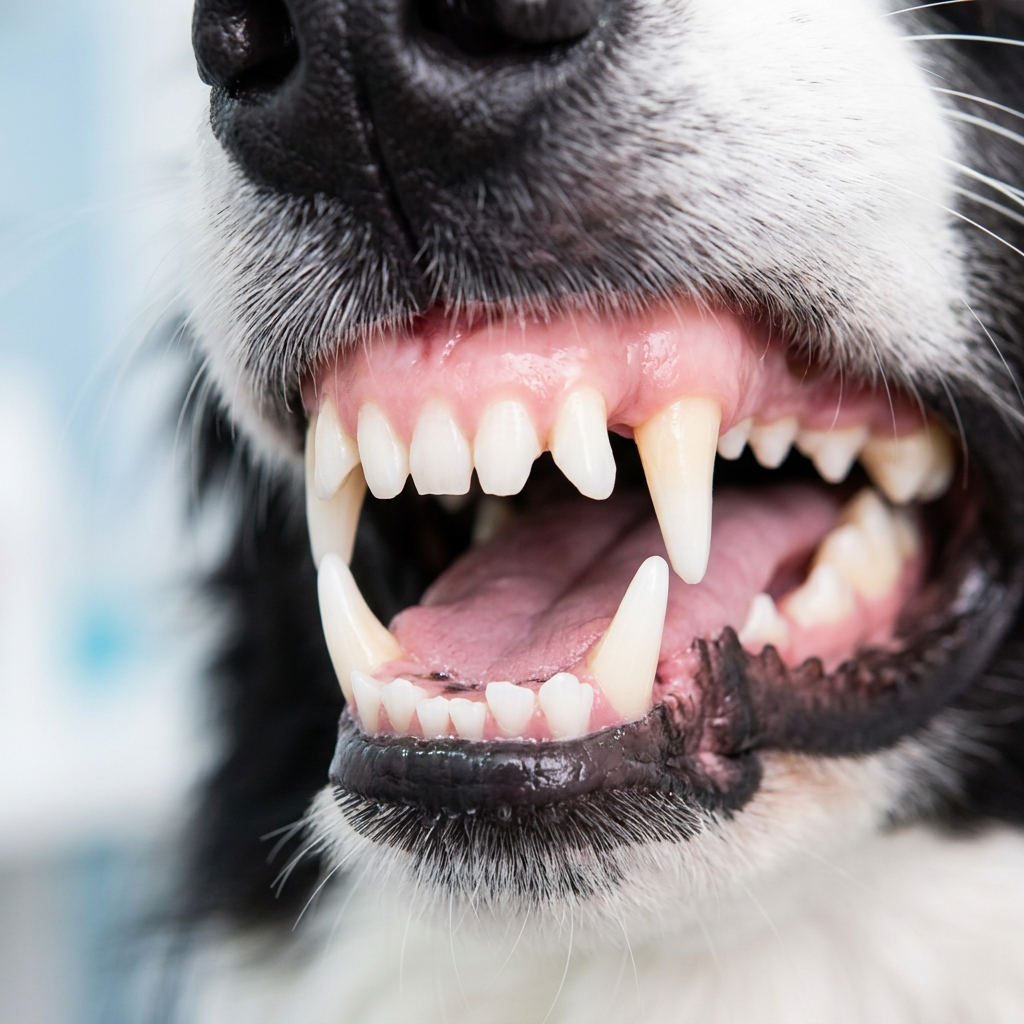
Plaque forms within hours after a meal, and if it is not removed, it can harden into tartar and lead to gingivitis. The Cornell Canine Health Center describes the warning signs of dental disease and the importance of home dental care.
Once tartar sets in, brushing alone will not remove it, and that is when professional cleaning becomes necessary.
The good news is that most of this is preventable with a consistent at-home routine and regular veterinary checkups.
Signs Your Dog Needs Dental Care
Dogs cannot tell us when their teeth hurt, but their bodies give plenty of signals. Cornell lists bad breath, difficulty eating, bleeding from the mouth, drooling, swelling, and decreased appetite among common signs of dental disease.
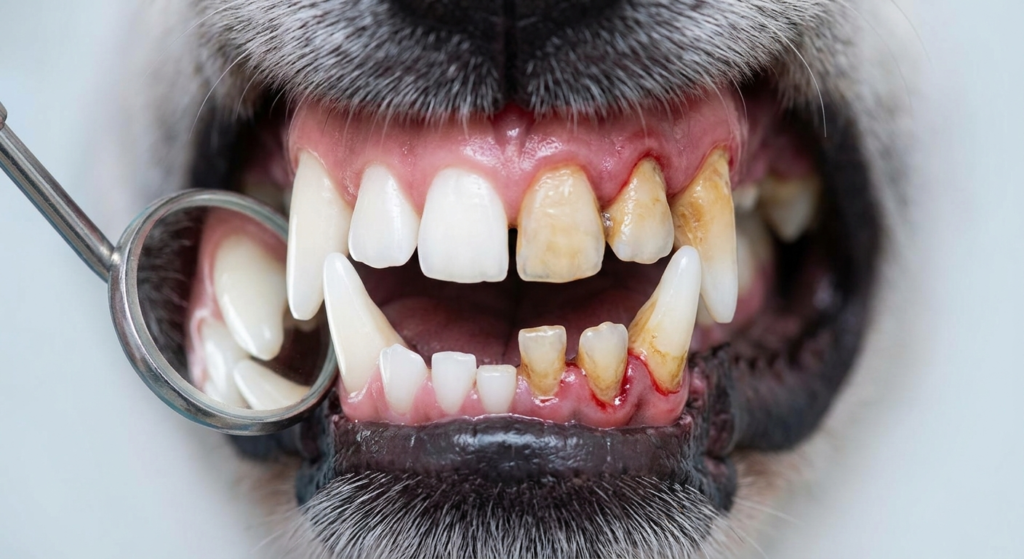
Watch for these warning signs:
- Bad breath (halitosis).
- Red, swollen, or bleeding gums.
- Excessive drooling or dropping food.
- Visible yellow or brown tartar near the gumline.
- Pawing at the mouth or face.
- Loss of appetite or weight loss.
- Loose or missing teeth.
If you notice two or more of these signs, it is time to schedule a veterinary dental exam. The AVMA also advises that pets with signs like abnormal chewing, drooling, reduced appetite, and mouth pain should be evaluated promptly.
How to Clean Your Dog’s Teeth at Home
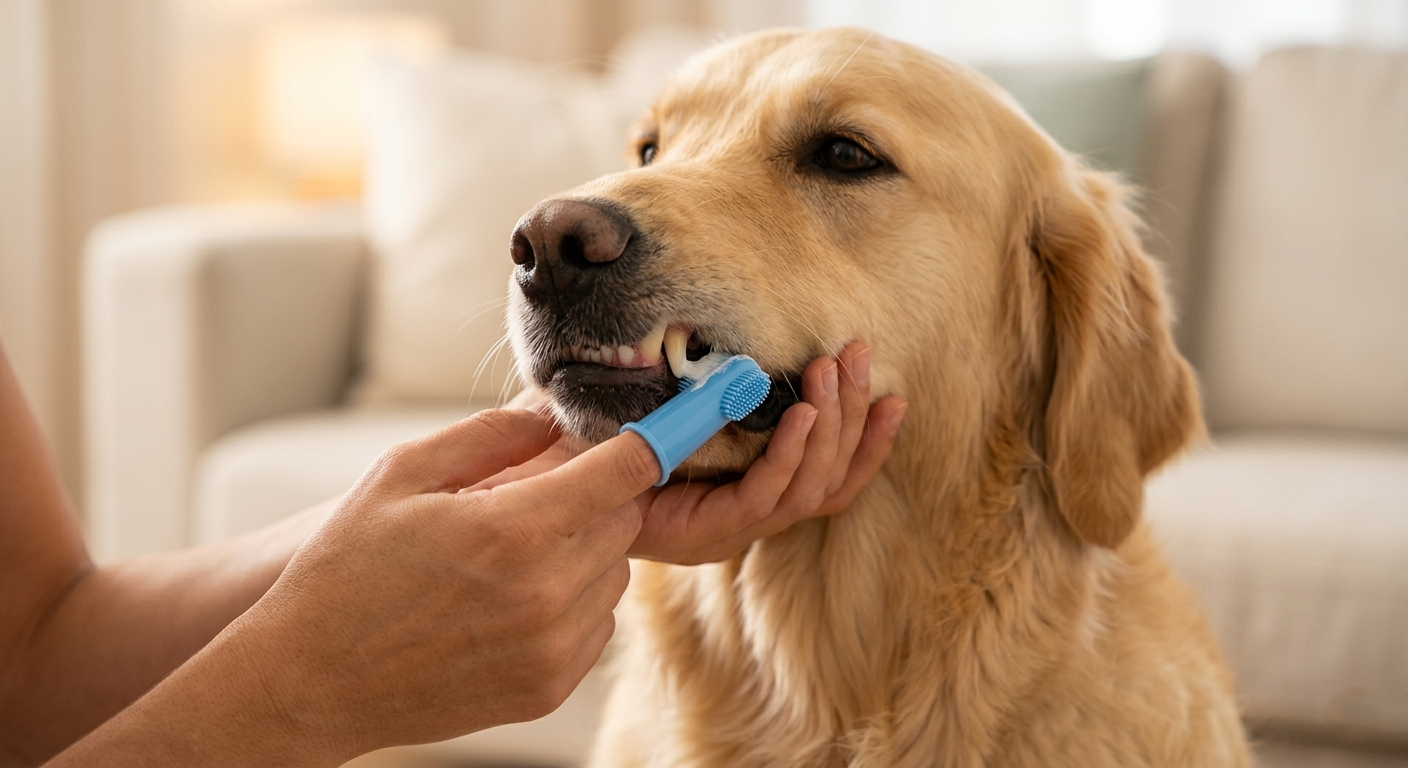
The single most effective thing you can do for your dog’s oral health is brush their teeth regularly. The AVMA says most dogs can learn to accept brushing with patience and positive reinforcement, and regular brushing is the best home-care habit for oral health.
It may sound daunting, but most dogs can learn to tolerate the process.
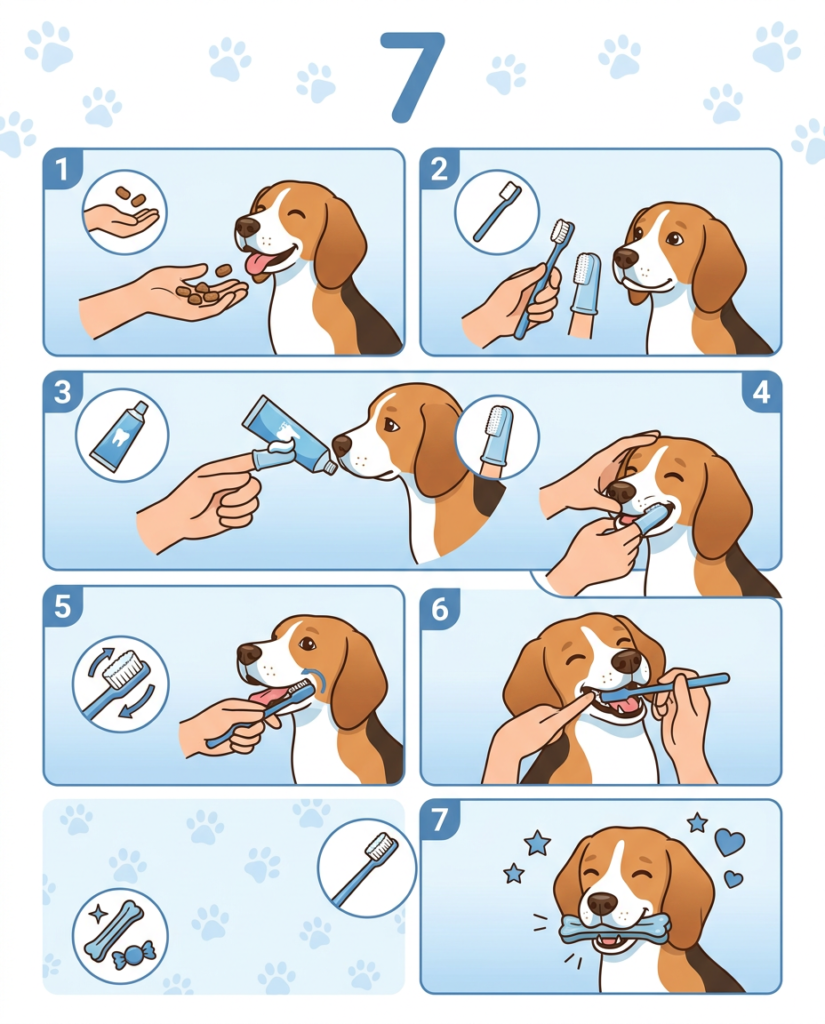
Step-by-Step Brushing Guide
- Choose a calm moment when your dog is relaxed.
- Gather a soft-bristled dog toothbrush or finger brush and dog-safe toothpaste.
- Let your dog taste the toothpaste first to build a positive association.
- Lift the lip gently and start with the front teeth.
- Brush in small circles at a 45-degree angle to the gumline.
- Keep sessions short, around 1–2 minutes.
- Reward with praise or a dental treat afterward.
The AVMA notes that brushing several times a week can still be effective, even if daily brushing is not realistic.
Starting when your dog is a puppy makes the routine easier to establish, but adult dogs can also learn with patience.
Best Types of Dog Toothpaste
Not all toothpastes are created equal, and the safest choice is always a pet-specific formula. The AVMA recommends talking with your veterinarian about dental products and brushing activities you are considering for your pet.
| Type | How It Works | Best For |
|---|---|---|
| Enzymatic toothpaste | Helps break down plaque chemically | Most dogs |
| Baking soda-based | Mild abrasive action | Dogs that tolerate brushing |
| Gel toothpaste | Easy to apply | Beginners or resistant dogs |
| Human toothpaste | Unsafe for dogs | Never use |
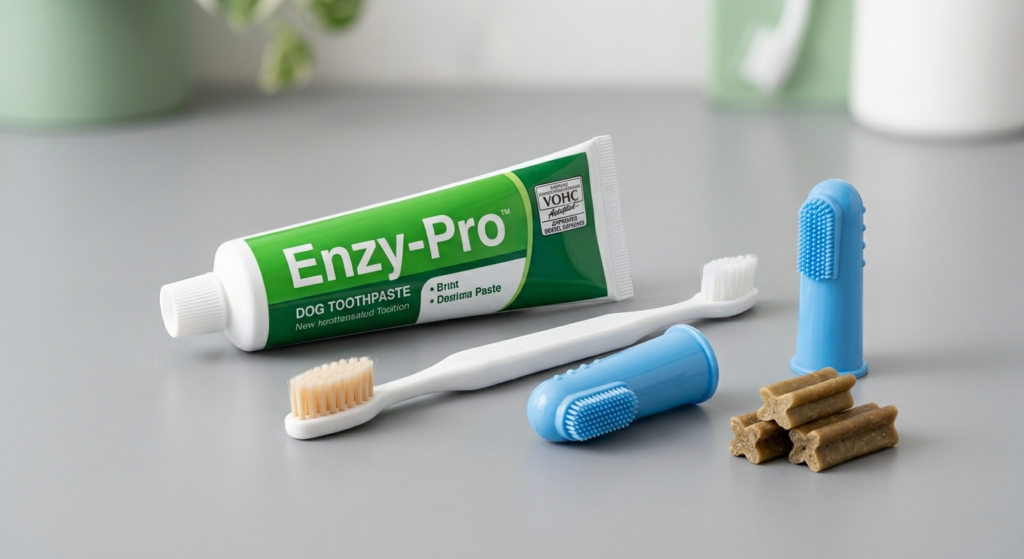
The VOHC is the best place to check whether a dental product has been accepted based on evidence of plaque or tartar reduction.
If you want a simple rule, look for dog toothpaste or dental products with the VOHC seal.
Professional Dog Dental Cleanings
Even the best at-home routine cannot replace a professional cleaning. The AVMA explains that veterinary dentistry includes preventive care, cleaning, extraction, repair, and oral health treatment, and that an oral exam should be performed at least yearly.
The AAHA dental guidelines also support professional dental care as part of preventive health.
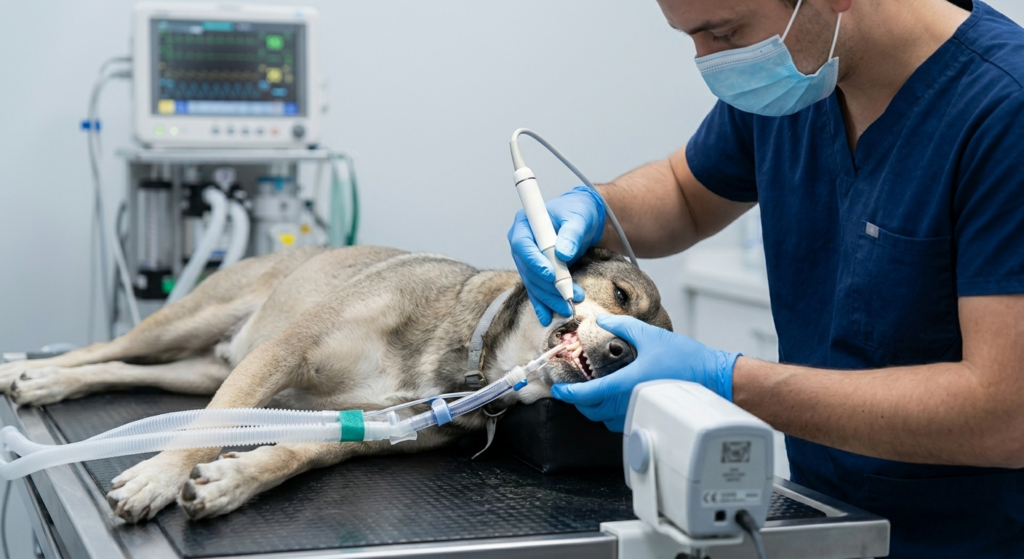
Veterinary professionals can properly assess tooth roots, bone loss, and pockets below the gumline only under anesthesia with dental X-rays.
Why Anesthesia Is Necessary
You may see ads for anesthesia-free cleanings, but these are not a substitute for a real dental procedure. The AVMA states that dental cleaning under anesthesia allows scaling below the gumline and radiographs to evaluate the tooth roots and jaw bone.
Without anesthesia, cleaning is superficial and can miss disease that is hidden below the gumline.
For healthy dogs, anesthesia is carefully monitored and generally well managed by veterinary teams.
Dog Dental Cleaning Cost Breakdown
Costs vary by location, clinic, and the severity of disease, but the basic ranges below are a useful estimate. Preventive care is usually much less expensive than treating advanced periodontal disease.
| Service Component | Typical Cost (USD) |
|---|---|
| Pre-anesthetic bloodwork | $80–$200 |
| Anesthesia | $100–$250 |
| Scaling & polishing | $150–$300 |
| Dental X-rays | $75–$200 |
| Tooth extractions | $50–$300+ per tooth |
| Total routine cleaning | $300–$700 |
The AVMA recommends annual checks, and the earlier disease is found, the less likely your dog will need costly extractions or advanced treatment.
FAQ
Can I use human toothpaste on my dog?
No. The AVMA recommends using toothpaste formulated specifically for pets and discussing products with your veterinarian.
How often should I brush my dog’s teeth?
Daily brushing is the gold standard, but brushing several times a week can still help reduce plaque buildup.
What are VOHC-approved dental products?
The VOHC evaluates products that help control plaque or tartar and maintains an accepted products list for dogs.
At what age should I start brushing my dog’s teeth?
Earlier is better, and starting when your dog is young helps create a routine they are more likely to accept.
Are dental chews enough on their own?
Dental chews can help, but they are best used as a supplement rather than a replacement for brushing and veterinary care. The VOHC accepted-products list is the safest place to verify which chews have supporting evidence.
Final Thoughts
Dog dental care is a core part of responsible pet ownership, not a luxury. A few minutes of brushing each day, plus annual professional cleanings and evidence-based dental products, can help protect your dog’s comfort and overall health.
Start small, stay consistent, and use trusted sources like the AVMA, Cornell, and VOHC to guide your recommendations.