Is Fresh Dog Food Worth It? Science, Costs & Benefits
The pet food landscape has transformed dramatically. What once seemed like an indulgent trend—fresh food for dogs—has now become backed by university research, veterinary endorsement, and thousands of satisfied pet parents. But is pet fresh dog food actually better than traditional kibble? And more importantly, is it worth the investment for your furry companion?
What is Fresh Dog Food?
Fresh dog food refers to whole-food meals made with human-grade ingredients like muscle meat, organ meat, and vegetables that are gently cooked to retain nutrients, avoiding the high-heat extrusion process used in kibble. Unlike traditional pet food, these meals use USDA-certified ingredients stored, handled, and processed according to the same standards applied to food meant for human consumption.
Think of it as the difference between a home-cooked meal and a TV dinner. Fresh food for dogs prioritizes ingredient quality, minimal processing, and nutritional bioavailability—meaning your dog’s body can actually absorb and utilize more of what they’re eating.
Is Fresh Food Better for Dogs? What the Science Says
For years, the debate around fresh versus traditional pet food relied heavily on anecdotal evidence. That changed when researchers at the University of Illinois conducted groundbreaking studies comparing the digestibility and health impacts of different diet formats.
Key Takeaways from University Research:
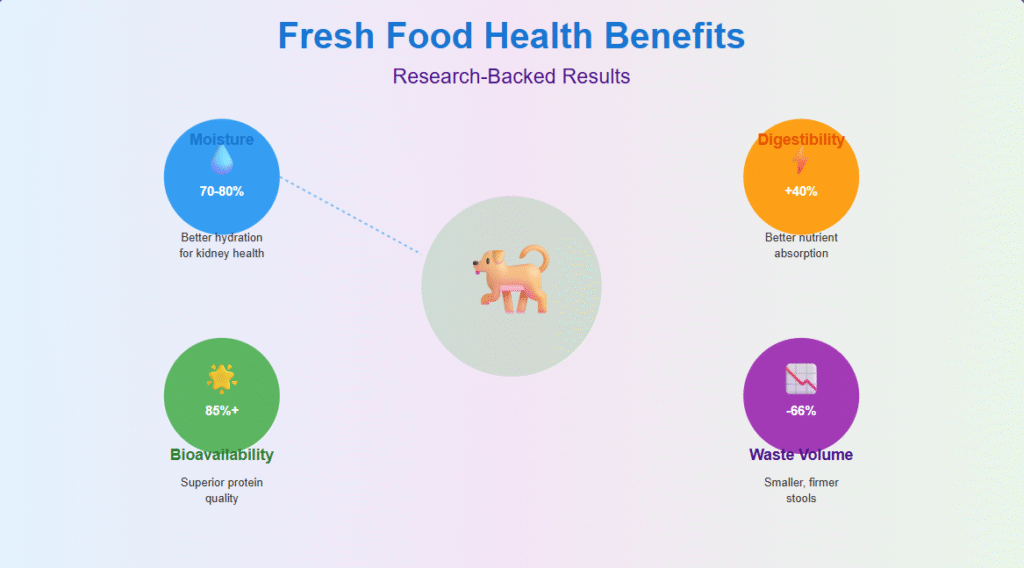
- Fresh food is up to 40% more digestible than kibble. Studies using the precision-fed cecectomized rooster assay demonstrated that human-grade fresh diets have significantly higher nutrient digestibility compared to extruded dry food.
- Higher moisture content aids kidney function. Fresh meals naturally contain 70-80% moisture compared to kibble’s 10%, helping maintain proper hydration—essential for kidney health and overall bodily functions.
- Dogs fed fresh food produce 66% less waste. The University of Illinois study found that beagles consuming human-grade fresh diets produced substantially less fecal matter—welcome news for anyone who scoops the yard.
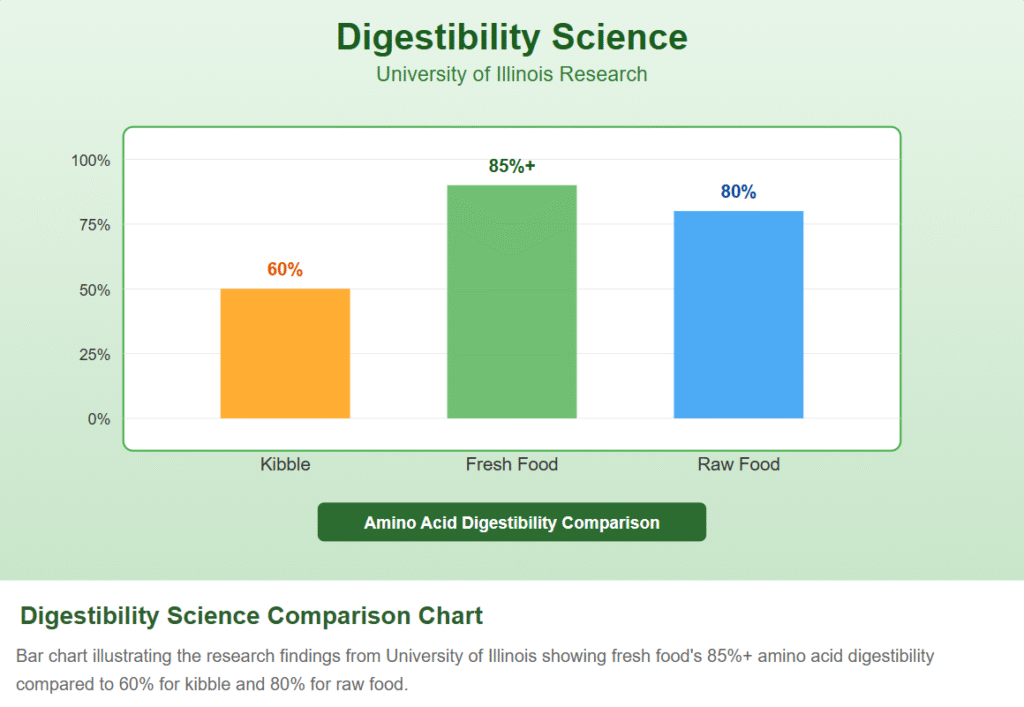
- Superior amino acid absorption. Fresh diets showed amino acid digestibility over 85%, indicating high protein quality that translates to better muscle maintenance and overall health.
Dr. Kelly Swanson, professor of animal and nutritional sciences at the University of Illinois, has published multiple peer-reviewed studies on this topic. His research team compared various diet formats—extruded kibble, fresh refrigerated food, and human-grade fresh meals—and consistently found that fresh diets outperformed traditional kibble in nutrient digestibility and metabolizable energy values.
The first study on human-grade dog food published by the University of Illinois demonstrated that these specialized diets are not only highly palatable but also more nutrient-dense than originally estimated. This means dogs require less food to maintain their body weight while receiving complete nutrition.
What does higher digestibility actually mean for your dog? When food is more digestible, your dog’s body extracts more nutrients from every bite. This translates to better energy levels, healthier coat condition, improved immune function, and yes—significantly less waste in your backyard.
Fresh vs. Kibble vs. Raw: The Ultimate Comparison
Understanding the differences between pet food formats helps you make an informed decision. Here’s how the three main options stack up:
| Factor | Fresh Food | Kibble (Extruded) | Raw Food |
|---|---|---|---|
| Processing Method | Gently cooked at low temperatures to preserve nutrients | High-heat extrusion (300-400°F) that can degrade vitamins and proteins | No cooking; frozen or freeze-dried to preserve raw state |
| Bioavailability | 85%+ amino acid digestibility; nutrients highly accessible | Lower digestibility due to heat damage and filler ingredients | High digestibility but varies by processing (frozen vs freeze-dried) |
| Cost per Day (50lb dog) | $7.25-$8.00 | $1.50-$3.00 | $6.30-$6.50 |
| Storage | Refrigeration required; stays fresh 4 days opened, 6 months frozen | Shelf-stable for months when sealed | Must remain frozen; thaw portions as needed |
| Safety | Cooked to eliminate pathogens; human-grade facility standards | Generally safe; long shelf life due to preservatives | Risk of bacterial contamination (Salmonella, E. coli) if not handled properly |
| Moisture Content | 70-80% | 10% | 60-75% |
Each format has its place. Kibble remains the most economical and convenient option, particularly for budget-conscious pet parents or those with multiple large dogs. Raw food appeals to owners seeking minimally processed nutrition but requires careful handling and storage. Fresh food strikes a balance—offering the nutritional benefits of whole ingredients with the safety of proper cooking.
Visual Differences: What to Expect in the Bowl (And on the Lawn)
What Fresh Food Actually Looks Like
One of the most striking differences between traditional pet food and fresh options is immediately visible when you open the package. Instead of uniform brown pellets, you’ll see:
- Recognizable ingredients: Actual pieces of chicken, beef, or turkey alongside visible vegetables like carrots, broccoli, and sweet potato
- Varied colors and textures: The natural rainbow of whole foods rather than artificial dyes
- Moisture: Meals that look like something you might eat yourself—because they’re made to human food standards
The “Poop” Analysis (Yes, Really)
Here’s a topic most pet food companies avoid discussing, but it’s actually one of the most noticeable real-world benefits of switching to fresh food. The University of Illinois research found that dogs fed human-grade fresh diets produced 1.5 to 2.9 times less fecal matter than those eating kibble.
Why does this matter? High digestibility means your dog’s body absorbs and uses more of what they eat. Less waste going in equals less waste coming out. Pet parents consistently report:
- Smaller, firmer stools that are easier to clean up
- Significantly reduced odor (both in the yard and from your dog)
- More consistent bowel movements with less digestive upset
- Easier yard maintenance—especially valuable for those with multiple dogs
This isn’t just a convenience factor. Lower fecal volume indicates that your dog is actually utilizing the nutrients in their food rather than passing them through undigested—a clear sign of superior food quality and digestibility.
The Cost of Fresh Dog Food (Breakdown by Weight)
Let’s address the elephant in the room: fresh food for dogs costs significantly more than traditional kibble. But understanding exactly what you’ll pay—and what you’re getting for that investment—is crucial to making an informed decision.
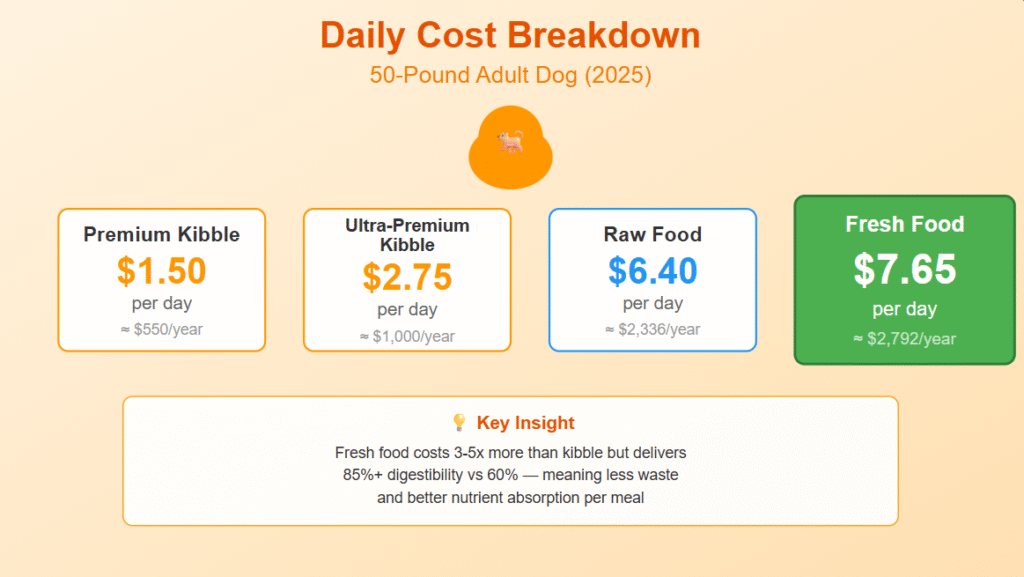
Real-World Pricing for Fresh Dog Food (2025)
For a 50-pound adult dog: Expect to pay approximately $7.25 to $8.00 per day depending on the protein source (turkey, beef, chicken, or pork). This translates to:
- Weekly cost: $50.75 – $56.00
- Monthly cost: $217.50 – $240.00
- Annual cost: $2,646 – $2,920
For a 30-pound dog: Daily costs range from $5.00 to $6.50, making it slightly more affordable for smaller breeds.
For a 20-pound dog: You’re looking at $4.44 to $4.87 per day—still a premium but more manageable for toy and small breed owners.
How This Compares to Other Options:
- Premium kibble (Purina Pro Plan, Royal Canin): $1.50 – $2.00/day for a 50lb dog
- Ultra-premium kibble (Orijen, Acana): $2.50 – $3.00/day
- Canned wet food: $3.00 – $4.00/day
- Raw commercial diets: $6.30 – $6.50/day
- Fresh food delivery services: $7.25 – $8.00/day
The bottom line: Fresh food costs approximately 3-5 times more than quality kibble. For a 50-pound dog, you’re investing an additional $2,000-$2,500 per year compared to feeding premium kibble.
Important cost considerations: These prices assume moderate activity levels. Active dogs who exercise vigorously or work (herding, agility, hunting) will require 30-40% more calories, increasing costs proportionally. Additionally, puppies and pregnant/nursing dogs need more food per pound of body weight.
The Real-World Pros and Cons
Advantages of Fresh Dog Food:
- Superior nutrient absorption: Research-backed 40% increase in digestibility means your dog gets more from every meal
- Better hydration: The 70-80% moisture content supports kidney function and overall health—particularly beneficial for senior dogs
- Cleaner ingredients: No mystery meat meals, no artificial preservatives, no fillers like corn gluten or wheat middlings
- Improved health markers: Many pet parents report shinier coats, better energy levels, reduced allergies, and improved dental health
- Dramatically less waste: Up to 66% reduction in fecal volume makes cleanup easier and indicates optimal digestion
- Palatability: Even picky eaters typically transition easily to fresh food due to its natural flavors and aromas
Disadvantages to Consider:
- Significant cost increase: 3-5x more expensive than quality kibble, potentially adding $2,000+ annually to your pet budget
- Storage requirements: Requires substantial freezer and refrigerator space, especially if you have multiple dogs
- Limited travel convenience: Unlike kibble, you can’t easily pack fresh food for trips unless you have access to refrigeration
- Shorter shelf life: Once thawed, meals last only 4 days in the refrigerator versus months for sealed kibble
- Subscription management: Most fresh food comes via subscription delivery, requiring planning around vacations and schedule changes
- Not universally necessary: Healthy dogs thriving on quality kibble may not see dramatic improvements worth the cost increase
Making the Right Decision for Your Dog
The research is clear: fresh food for dogs offers measurable benefits in digestibility, nutrient absorption, and overall health markers. But whether it’s the right choice depends on your individual circumstances.
Fresh food makes the most sense for:
- Dogs with chronic digestive issues, food sensitivities, or allergies
- Senior dogs who could benefit from higher moisture content for kidney support
- Pets recovering from illness or surgery who need easily digestible, nutrient-dense meals
- Owners who can comfortably afford the 3-5x cost increase without financial strain
- Small to medium-sized dogs where the daily cost is more manageable
Quality kibble remains appropriate for:
- Healthy dogs thriving on their current diet with no digestive or health concerns
- Households with multiple large dogs where fresh food becomes financially prohibitive
- Owners who travel frequently or need maximum convenience
- Situations where the pet food budget is already stretched
The hybrid approach: Many veterinarians and pet nutritionists recommend using fresh food as a topper or mixing it 50/50 with quality kibble. This provides some benefits of fresh ingredients while managing costs and maintaining convenience—a practical middle ground that many families find sustainable long-term.
The Bottom Line on Fresh Food for Dogs
Pet fresh dog food represents a genuine advancement in canine nutrition, backed by peer-reviewed research from institutions like the University of Illinois. The science confirms what many pet parents have observed: fresh, human-grade ingredients prepared with minimal processing deliver superior digestibility, better nutrient absorption, and measurable health benefits.
However, “better” doesn’t always mean “necessary.” A healthy dog eating quality commercial kibble from a reputable brand can live a long, vibrant life. The decision to switch to fresh food should weigh the proven benefits against the substantial cost increase—roughly $2,000-$2,500 annually for an average-sized dog.
What matters most is feeding a complete, balanced diet appropriate for your dog’s life stage, activity level, and health status. Whether that comes from fresh food, premium kibble, or a combination of both depends on your priorities, budget, and your dog’s individual needs.
Before making any dietary changes, consult with your veterinarian. They can assess your dog’s current health, discuss whether fresh food would provide meaningful benefits for your specific pet, and help you transition safely if you decide to make the switch.
Sources: This article references peer-reviewed research from the University of Illinois College of Agricultural, Consumer & Environmental Sciences, published in journals including Translational Animal Science and the Journal of Animal Science. Pricing data compiled from major fresh food providers including The Farmer’s Dog, JustFoodForDogs, and Nom Nom, current as of 2025.