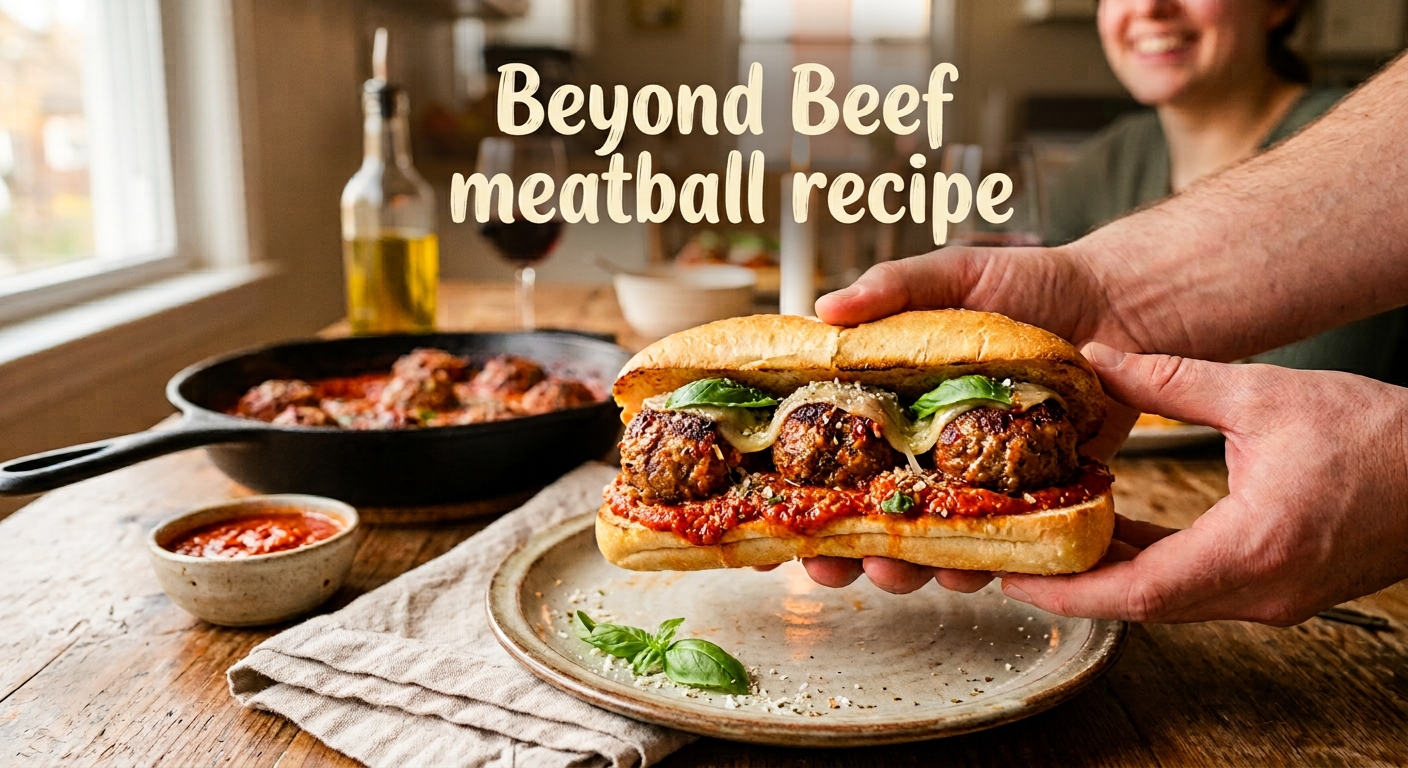
Recreating Sunday Dinner: Juicy Plant-Based Meatball Subs Made Easy
Childhood memories of Sunday meatball subs are hard to beat. Recreating that savory magic without meat often ends in disappointment, as plant-based versions frequently turn out crumbly. Today, we are keeping the comfort but swapping the cow with the ultimate Beyond Beef meatball recipe.
Mastering this alternative requires understanding the “beef benchmark”—how plant proteins behave compared to ground beef. According to culinary science, the white flecks in Beyond are plant fats that melt at lower temperatures than animal fat. Overworking the mixture with warm hands melts this flavor prematurely, so always handle it gently.
Searing the outside triggers the Maillard reaction, forming a savory crust that perfectly mimics traditional texture. This easy meatball recipe guarantees a foolproof, juicy center.
Beyond Beef vs. Impossible: Choosing the Right Base for a Meat-Like Texture
Deciding between Beyond Beef vs Impossible for vegetarian meatballs comes down to flavor and fat behavior. Impossible uses soy and coconut oil, creating a neutral canvas. Beyond relies on pea protein, cocoa butter, and coconut oil, offering a richer base that loves umami flavoring for meat substitutes like tomato paste.
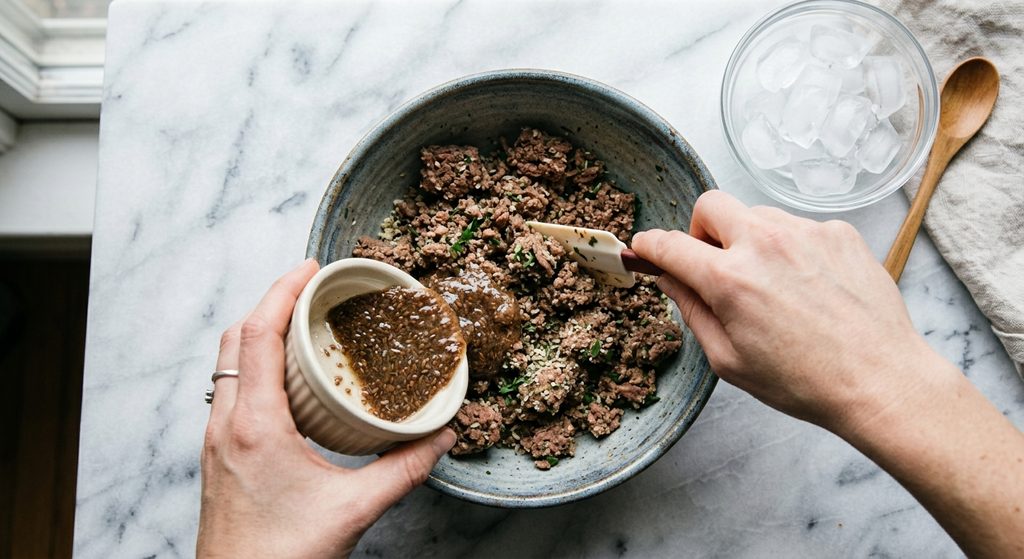
Those little white flecks you see in the raw mixture are saturated plant fats, behaving distinctly from traditional beef fat:
- Beyond Beef: Cocoa butter and coconut oil melt rapidly near room temperature.
- Impossible: Primarily coconut oil, offering a slightly higher melting point.
Because these plant fats melt so easily from the warmth of your hands, cold mixing is mandatory to keep the meatball juicy. Overworking the mixture melts the fat before cooking, guaranteeing a dry bite. Properly handled fats require the right binders to maintain structural integrity and prevent disintegration in sauce.
The Secret to Structural Integrity: Binders that Prevent Disintegration in Sauce
Ever had a meatball disintegrate in your marinara? Plant-based alternatives lack the natural connective tissue of beef. To solve how to keep veggie meatballs from falling apart, certain ingredients must act as the structural engineers of your mix. The golden rule is one “egg” and a half-cup of dry crumbs per pound of Beyond Beef.
Finding the best binders for plant-based meatballs is simple using these pantry-friendly combinations:
- The Classic: 1 real egg plus ½ cup panko breadcrumbs.
- The Vegan Go-To: 1 tablespoon ground flaxseed mixed with 3 tablespoons water (a standard flax egg binder), plus ½ cup regular crumbs.
- The Allergy-Friendly: 1 tablespoon hydrated chia seeds plus ½ cup crushed oats for a sturdy gluten free plant based meatball binder.
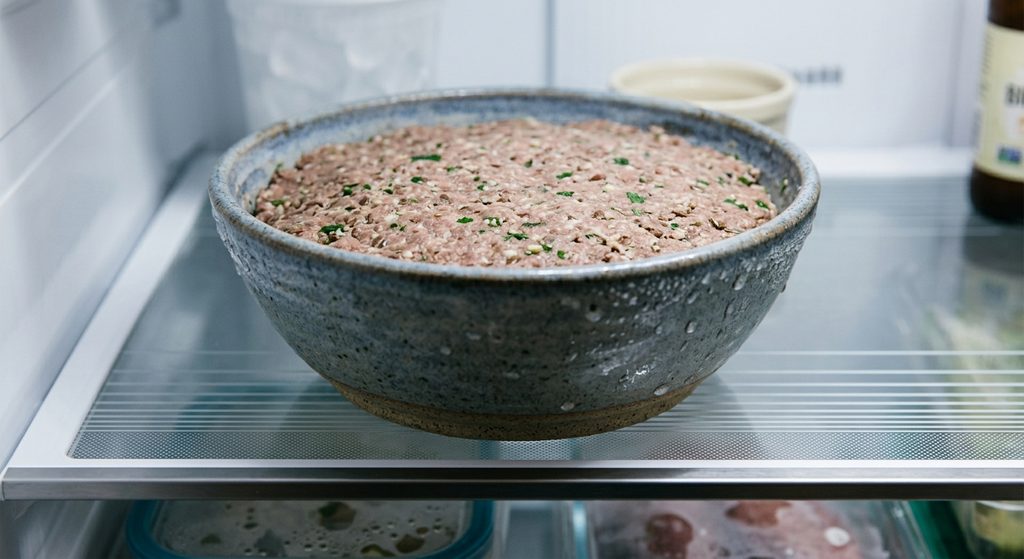
After mixing, resist the urge to start rolling. Give your bowl a 10-minute “chill-step” in the fridge. This resting period provides essential hydration time, allowing the dry crumbs to absorb moisture and form a stable, thick cookie dough texture. Once the physical structure is locked in, layering the right flavors will satisfy even die-hard beef lovers.
Layering Umami: Seasoning Beyond Meat to Satisfy Die-Hard Beef Lovers
Ground beef naturally develops a deep, savory richness—known as umami—when cooked. To achieve that same mouthwatering depth, use a smart umami flavoring for meat substitutes. Stirring a tablespoon of soy sauce, a squeeze of tomato paste, or finely minced mushrooms into your Beyond Beef builds a meaty foundation that easily satisfies die-hard traditionalists.
Balancing these heavy savory notes requires the “Acid-Brightening” rule. A quick splash of apple cider vinegar cuts through the rich plant-based fats, effectively masking any lingering earthy scent from the proteins. Next, fold in a robust vegan italian style meatball seasoning using everyday dried oregano, garlic powder, and smoked paprika to deliver that classic Sunday dinner aroma.
Now that your flavorful mix is rolled into golf-ball-sized spheres, it is time for the heat. Earning a crispy exterior without losing the juicy center requires specific temperature control.
From Air Fryer to Oven: Cooking Techniques for the Perfect Golden Crust
Getting a steak-house sear is simple, but remember our beef benchmark: Beyond Beef doesn’t experience “carry-over cooking.” Unlike traditional meat, these meatballs won’t continue warming once removed from the heat. To avoid a crumbly texture, you must closely monitor the internal temperature for cooked plant-based meat.
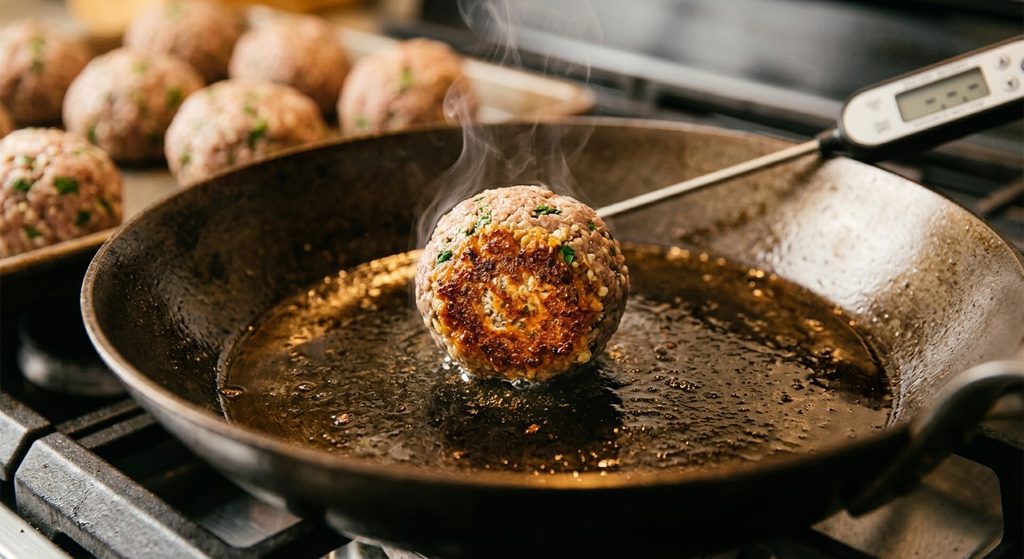
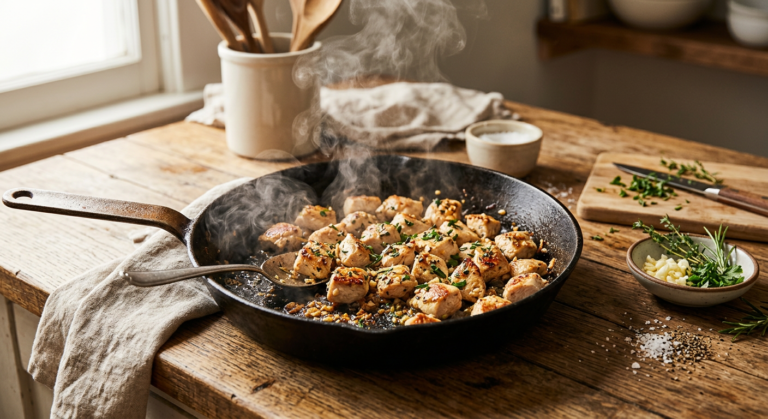
Patience is crucial when pan-searing plant-based proteins. Give them two undisturbed minutes in a hot, oiled skillet to form a true Golden Crust. If they stick when you try to flip them, just wait! They will naturally release from the pan once the crust fully seals.
For a completely hands-off method, baking plant-based meatballs in the oven yields wonderfully even results. Short on time? Follow our quick 10-minute air fryer meatless meatball instructions to achieve a perfectly crispy outside while locking in the juicy center.
- Pan-Sear: Medium-high heat, 8-10 minutes, turning occasionally.
- Air Fryer: 380°F for 10 minutes, shaking the basket halfway.
- Oven Bake: 400°F, 12-15 minutes on a parchment-lined pan.
Whichever tool you use, target exactly 165°F (the recommended internal temperature for safe plant-based meat preparation). Pushing past this temperature melts away those delicate plant-based fats, leaving the center dry. Have leftover portions? They can easily be frozen and reheated without losing moisture.
Make-Ahead Magic: Freezing and Reheating Without Losing Moisture
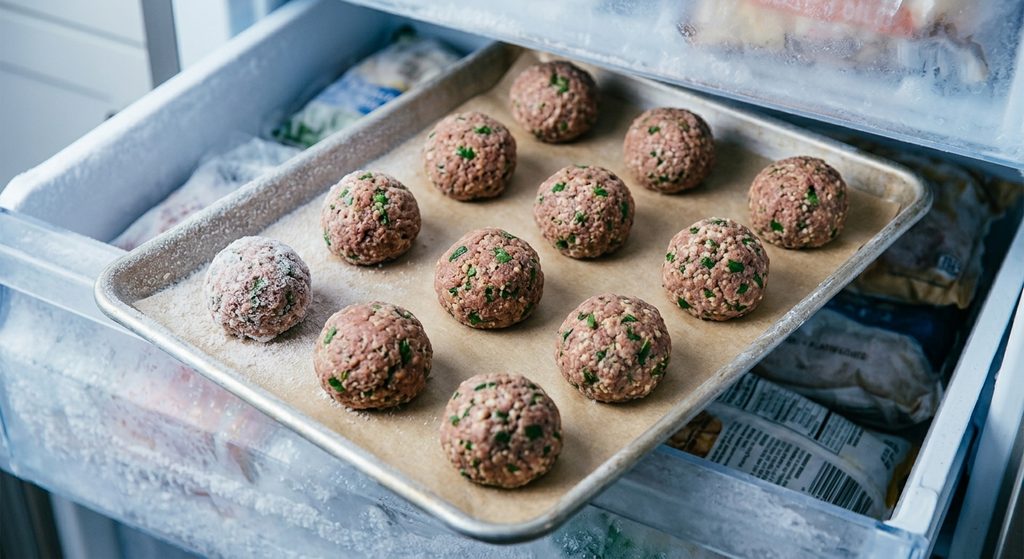
Busy weeknights demand smart shortcuts, making healthy meatless dinner meal prep a true lifesaver. People often ask: can you freeze uncooked meatless meatballs? Absolutely.
To prevent them from fusing into a solid block, utilize a technique called flash-freezing. Just space your raw, shaped portions on a flat pan in the freezer until perfectly solid, then transfer them into an airtight bag.flat pan in the freezer until perfectly solid, then transfer them into an airtight bag.
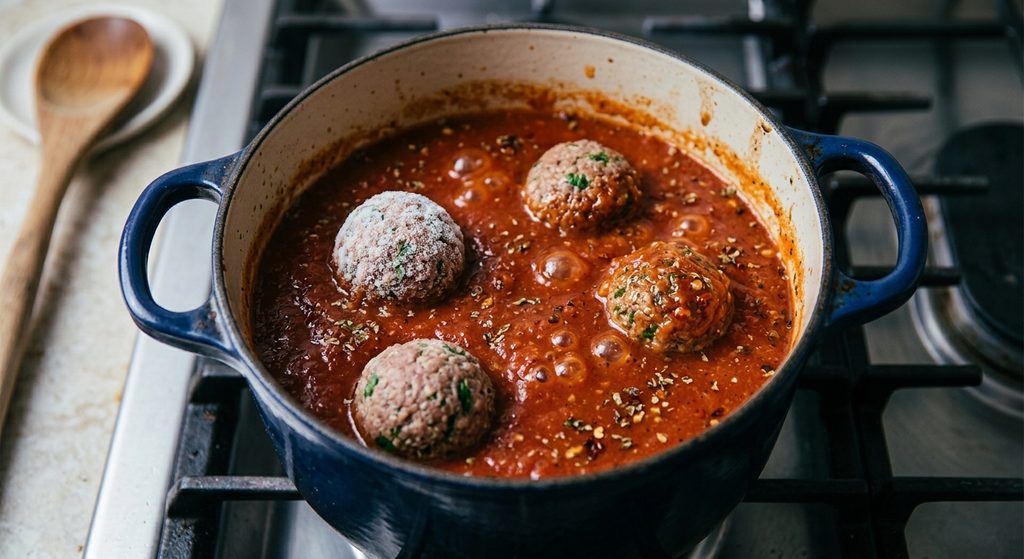
Later, skip the harsh microwave and use a sauce-simmering finish instead. Slowly cooking meatless meatballs in tomato sauce directly from frozen acts as a protective barrier, locking in those delicate plant fats while gently warming the center.
Your 3-Step Action Plan for a Perfect Plant-Based Meatball Dinner
Mastering this easy meatball recipe means you no longer have to settle for dry crumbles. By respecting the cold mix rule to protect those delicate plant fats and selecting your ideal egg or flax binder, you can easily build a strong, workable structure. Drop these savory spheres directly into a warm marinara sauce for an immediate win at the dinner table.
With a savory golden crust and tender, juicy center, these homemade vegetarian meatballs offer an excellent alternative to store-bought options. You are now fully equipped to deliver a rich, comforting meal for your next dinner.
Q&A
Question: Why is cold mixing so important for Beyond Beef meatballs?
Short answer: Beyond Beef contains plant fats (cocoa butter and coconut oil) that melt at lower temperatures than beef fat. Warm hands and overmixing can melt these fats before cooking, causing dryness and crumbling. Handle the mixture gently, keep it cold, and include a 10-minute fridge “chill-step” after mixing so crumbs hydrate and the structure sets before rolling.
Question: What binders and ratios keep plant-based meatballs from falling apart?
Short answer: Use one “egg” and 1/2 cup dry crumbs per pound of Beyond Beef. Options include: 1 real egg + 1/2 cup panko (classic), 1 tbsp ground flax + 3 tbsp water + 1/2 cup crumbs (vegan), or 1 tbsp hydrated chia + 1/2 cup crushed oats (allergy-friendly/gluten-free). After mixing, chill 10 minutes to lock in a thick, cookie-dough-like texture that holds up in sauce.
Question: Beyond Beef vs. Impossible—which is better for meatballs and why?
Short answer: Both work, but they behave differently. Beyond (pea protein with cocoa butter and coconut oil) melts quickly and offers a richer base that pairs beautifully with umami boosters like tomato paste. Impossible (soy with primarily coconut oil) has a slightly higher fat melting point and a more neutral flavor. Choose Beyond for richer, umami-forward results; choose Impossible for a milder canvas.
Question: How do I get a crispy exterior and juicy center without overcooking?
Short answer: Sear to trigger the Maillard reaction, then cook just to 165°F—plant-based meatballs don’t have carry-over cooking. Let them sear undisturbed for about 2 minutes so they release naturally before turning. Time and temp guides: pan-sear over medium-high for 8–10 minutes, turning occasionally; air fry at 380°F for 10 minutes, shaking halfway; or bake at 400°F for 12–15 minutes on parchment. Going past 165°F melts delicate fats and dries the center.
Question: Can I freeze meatless meatballs and how should I reheat them?
Short answer: Yes—flash-freeze shaped, raw meatballs on a sheet pan until solid, then store in an airtight bag to prevent sticking. Reheat straight from frozen by gently simmering them in tomato sauce; the sauce acts as a protective, moist barrier that warms the center without drying or melting out the fats. Skip the microwave for best texture.