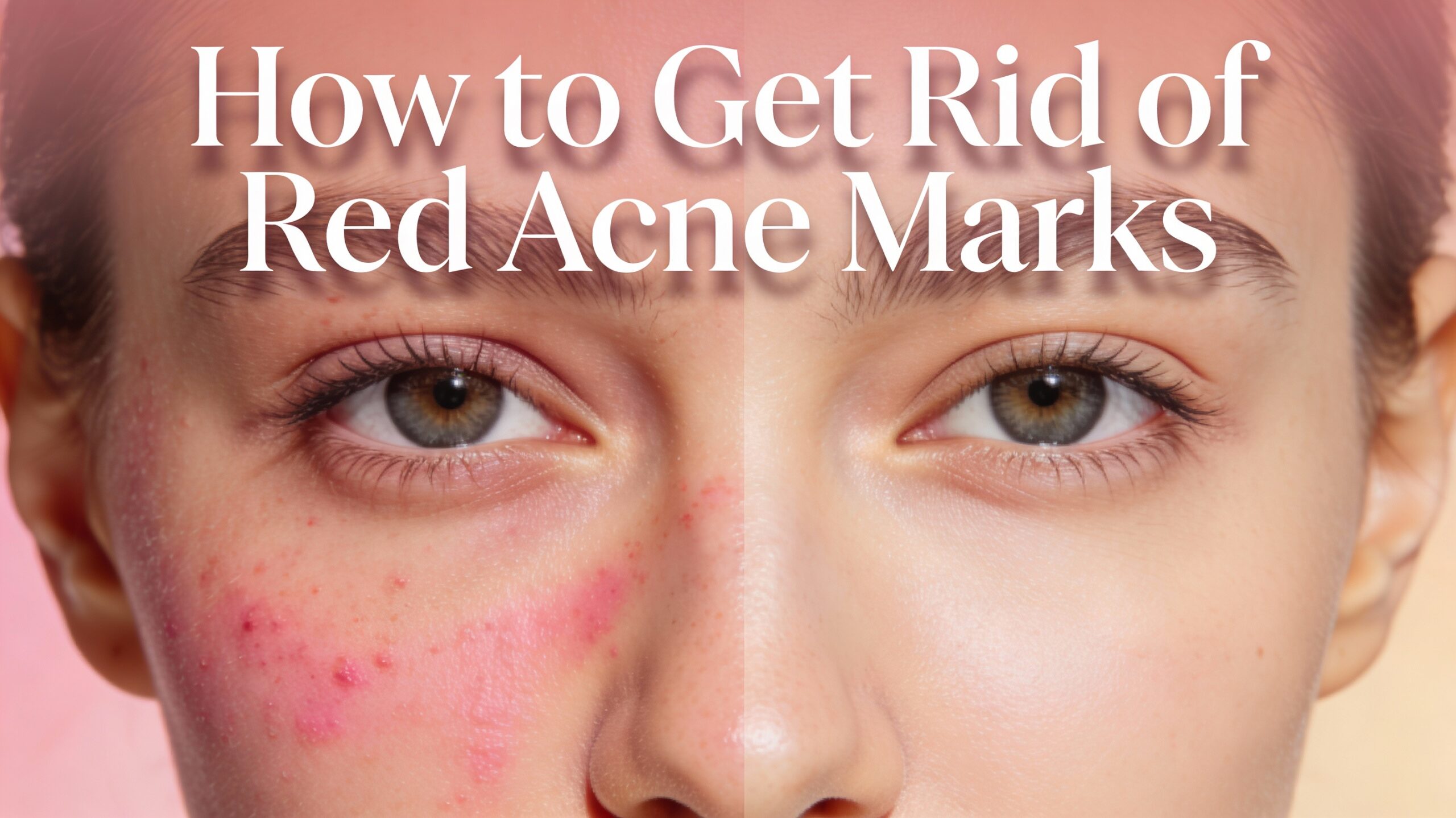
How to Get Rid of Red Acne Marks (PIE): The Dermatologist’s Protocol
Understanding how to get rid of red acne marks starts with knowing what they actually are. Red acne marks are medically known as Post-Inflammatory Erythema (PIE). Unlike brown scars caused by pigment deposits, these persistent red spots result from damaged blood vessels beneath the skin’s surface. According to board-certified dermatologists, treating them requires a vascular approach: specifically vascular lasers, 10% niacinamide, and azelaic acid. This science-backed protocol addresses the root cause rather than masking symptoms.
Step 0: The “Remission” Rule (Don’t Skip This)
Here’s the truth most skincare blogs bury in their footnotes: you must treat active acne before treating red marks. Period.
Dr. Henry Lim, a renowned dermatologist, emphasizes this foundational principle. It doesn’t matter whether you choose retinols, salicylic acid, dietary changes, zinc supplements, or stress management meditation—get the active breakouts under control first. Why? Because continuing inflammation perpetuates the vascular damage that creates PIE.
Think of it like trying to mop a floor while the faucet is still running. You’re fighting a losing battle. Once your skin goes into remission (no new active pimples for at least 2-3 weeks), then you can focus your energy and resources on erasing those lingering red reminders.
For comprehensive information on acne treatment options, visit the American Academy of Dermatology’s acne resource center.
PIE vs. PIH: Why Your Brown Spot Cream Won’t Work on Red Marks
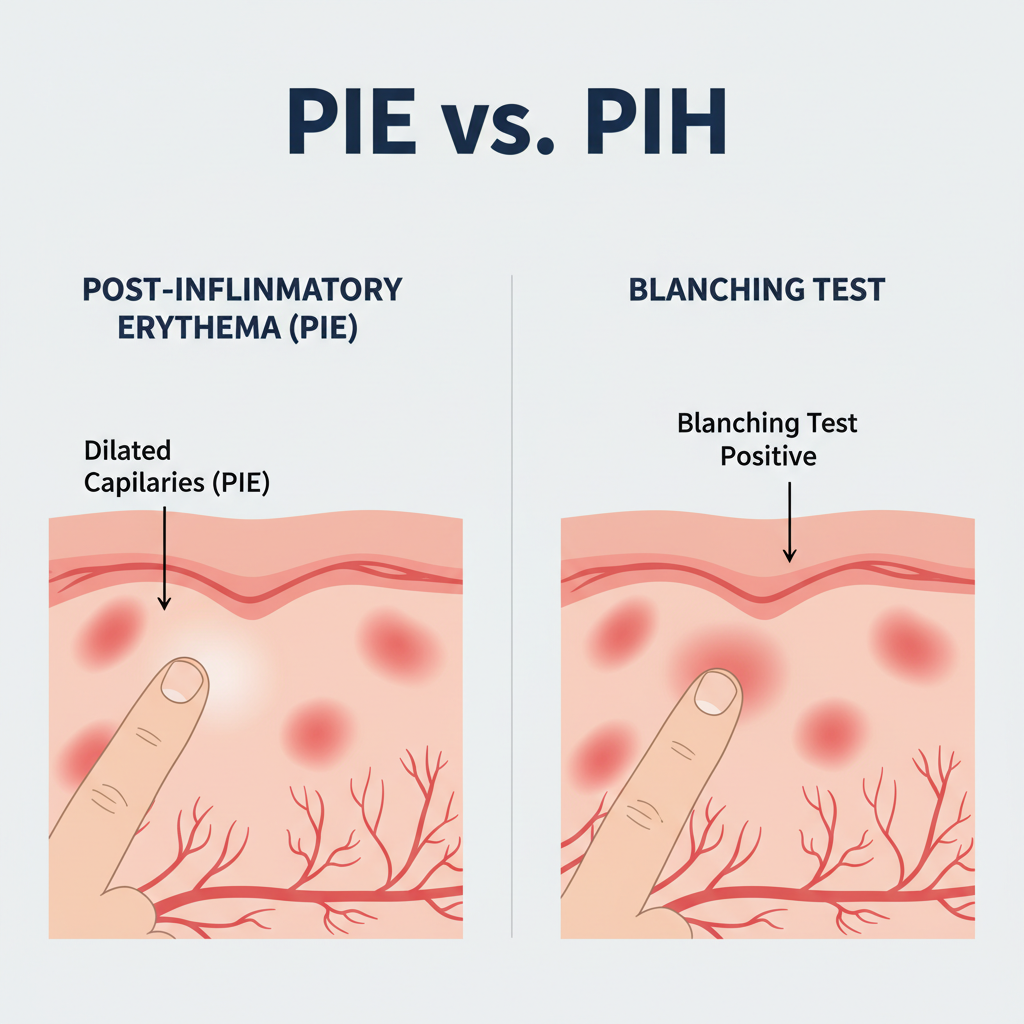
Understanding the difference between Post-Inflammatory Erythema (PIE) and Post-Inflammatory Hyperpigmentation (PIH) is critical. Using the wrong treatment wastes time and money.
| Characteristic | PIE (Red Marks) | PIH (Brown Marks) |
|---|---|---|
| Appearance | Pink, red, or purple | Brown, tan, or dark spots |
| Underlying Cause | Damaged capillaries and blood vessels | Excess melanin production |
| Skin Response | Blanches (disappears) when pressed | Remains visible when pressed |
| Best Treatments | Vascular lasers, azelaic acid, niacinamide | Tyrosinase inhibitors, hydroquinone, vitamin C |
| Timeline | 6-12 months naturally | 3-24 months depending on depth |
The Press Test: Here’s a simple diagnostic you can do right now. Take your finger and press firmly on a red mark for 3-5 seconds. If the redness temporarily disappears (blanches) and then returns when you release pressure, you’re dealing with PIE—a vascular issue. If the mark stays the same color throughout, it’s likely PIH or a different type of scarring.
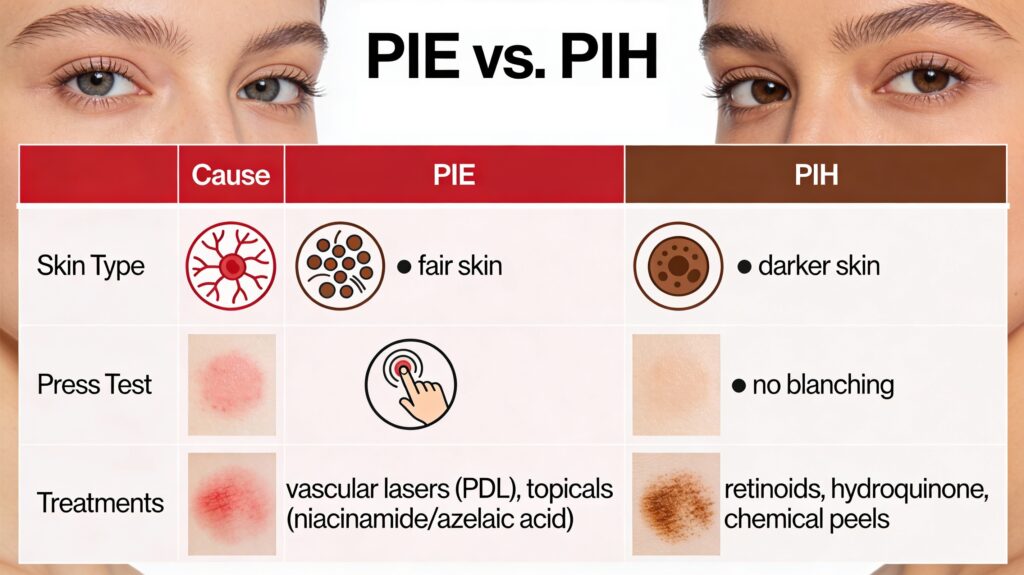
This distinction matters because melanin-targeting ingredients like hydroquinone or kojic acid won’t significantly impact vascular redness. You need ingredients that calm inflammation and support vessel repair.
Learn more about the differences between acne scars and marks from Cleveland Clinic.
The “Big 3” Topicals for Redness (According to Science)
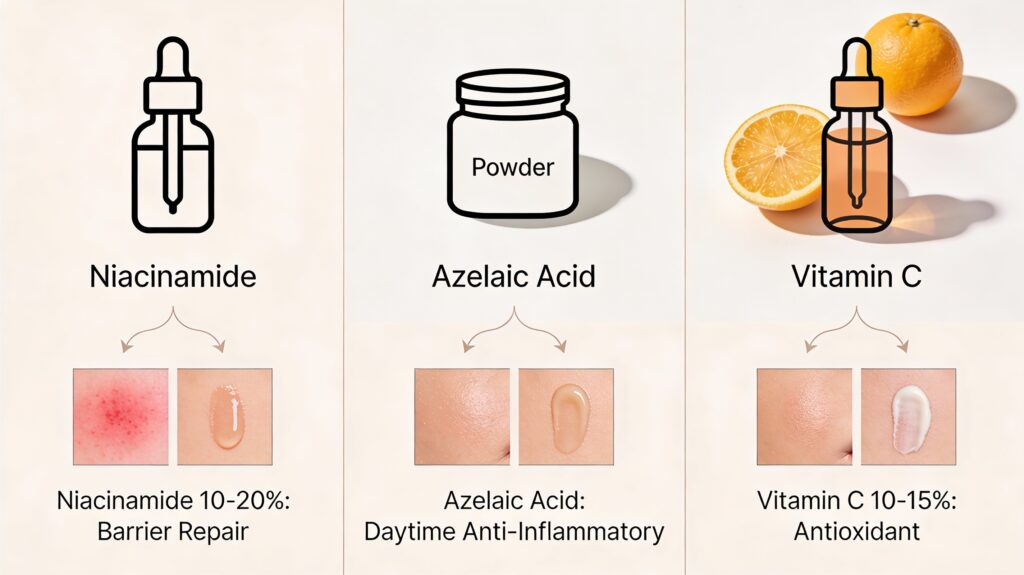
1. Niacinamide (Vitamin B3)
Niacinamide is the workhorse ingredient for reducing redness. Dermatologists recommend 10-20% concentration for optimal results. This ingredient strengthens the skin barrier, reduces inflammation, and regulates sebum production—addressing multiple factors that contribute to post-acne redness.
What makes niacinamide exceptional is its safety profile. It’s considered “banal” (dermatology-speak for extremely safe) even for compromised skin barriers like those with rosacea or eczema. Cost-wise, it’s remarkably affordable—often just cents per application.
Application tip: Look for serums or moisturizers with niacinamide as a primary ingredient. Apply it twice daily after cleansing and before heavier creams. Studies show visible improvement in redness within 4-8 weeks of consistent use.
Research on niacinamide’s benefits can be found in peer-reviewed studies on PubMed.
2. Azelaic Acid
Azelaic acid is a multitasking powerhouse that reduces inflammation, inhibits melanin production, and prevents future breakouts—making it ideal for those still experiencing occasional pimples alongside red marks.
The recommended concentration ranges from 10-20% depending on sensitivity. Prescription-strength formulations (20%) deliver faster results but may cause initial irritation. Over-the-counter options at 10% provide a gentler introduction.
Best practice: Apply azelaic acid in the morning after cleansing. Its anti-inflammatory properties work synergistically with sunscreen to protect healing skin throughout the day. Give it 8-12 weeks to see significant fading of red acne marks.
3. L-Ascorbic Acid (Vitamin C)
L-ascorbic acid acts as a potent free radical scavenger, protecting damaged blood vessels from oxidative stress while supporting collagen synthesis. The recommended concentration is 10-15% in a stabilized formula.
However, there’s a caveat: vitamin C can be irritating for sensitive skin types. If you have reactive skin or active rosacea, introduce this ingredient slowly—perhaps every other day initially—and monitor your response.
Storage matters: L-ascorbic acid oxidizes rapidly when exposed to light and air. Store your vitamin C serum in an opaque, airtight bottle in a cool location. If the formula turns dark yellow or brown, it’s oxidized and should be replaced.
The National Institutes of Health provides detailed information about vitamin C’s role in skin health.
The “Insider” Hacks: Off-Label Treatments
This section contains the information gain that separates amateur advice from professional protocols. These treatments are used by dermatologists but rarely discussed in mainstream skincare content.
Topical Timolol (Beta Blockers)
Technically classified as glaucoma medication (eye drops), topical timolol has gained traction among dermatologists for treating vascular lesions and red scars. The mechanism? Beta blockers constrict blood vessels, reducing the appearance of redness.
Dermatologists typically prescribe 0.5% timolol gel for spot treatment on stubborn red marks. While it’s an off-label use, clinical observations show promising results, particularly for PIE that hasn’t responded to conventional treatments.
Important note: This requires a prescription and should only be used under dermatological supervision due to potential systemic absorption.
Brimonidine (Mirvaso)
Originally developed for rosacea, brimonidine is an alpha-adrenergic agonist that temporarily constricts blood vessels, dramatically reducing redness within 30 minutes of application.
The catch? Dr. Lim warns about “rebound redness”—a phenomenon where blood vessels dilate even more intensely several hours after the medication wears off. This makes brimonidine better suited for special occasions rather than daily PIE treatment.
Tranexamic Acid
Emerging research suggests that topical tranexamic acid at 3-5% concentration can modulate blood vessel production and reduce inflammation. While traditionally used for melasma (a pigmentation disorder), its anti-inflammatory properties show promise for post-inflammatory erythema as well.
Tranexamic acid works by inhibiting plasmin, which plays a role in inflammation and vascular permeability. Early studies indicate it may accelerate the fading of red acne marks when combined with other topical treatments.
When Skincare Fails: Lasers and Professional Devices
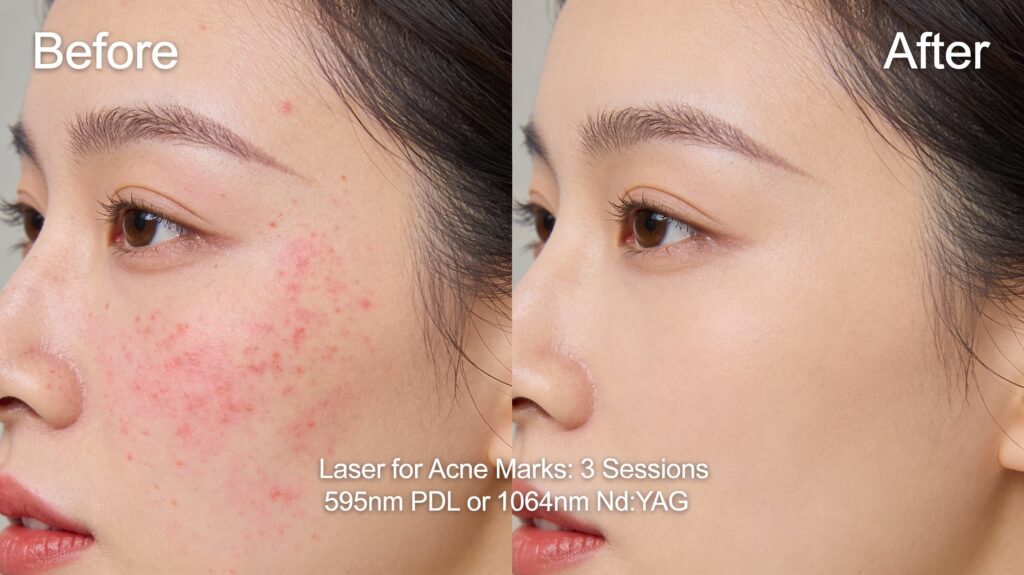
Let’s be honest: topical treatments have limitations. For persistent or severe PIE, professional laser for acne marks delivers faster, more dramatic results.
Vascular Lasers: The Gold Standard
Unlike competitors who vaguely mention “laser treatment,” here are the specific wavelengths dermatologists use:
595nm (Pulsed Dye Laser/V-Beam)
The classic vascular laser that targets hemoglobin in blood vessels. It’s highly effective for superficial redness but may cause temporary purpura (bruising) that lasts 7-10 days. Most patients need 3-5 sessions spaced 4-6 weeks apart.
532nm (KTP Laser)
A gentler alternative with less downtime. The shorter wavelength targets superficial vessels effectively while minimizing bruising. Ideal for patients who can’t tolerate the purpura associated with PDL.
1064nm (Long Pulse Nd:YAG)
This longer wavelength penetrates deeper into the dermis, targeting vessels below the surface while simultaneously stimulating collagen production. It’s excellent for darker skin types who might experience hyperpigmentation from shorter wavelengths.
The American Society for Laser Medicine and Surgery provides resources on laser treatments for various skin conditions.
BroadBand Light (BBL/IPL)
If true vascular lasers aren’t available in your area, Intense Pulsed Light (IPL) or BroadBand Light (BBL) treatments offer an alternative. Use the 500-600nm filter specifically to target vascular concerns.
While IPL isn’t as precise as dedicated vascular lasers, it’s more widely available and typically more affordable. Expect 4-6 treatments for noticeable improvement in red acne marks.
RF Microneedling
Radiofrequency microneedling combines mechanical needling with thermal energy to remodel skin and repair damaged vessels. While effective for stubborn cases of PIE, it comes with higher cost and downtime compared to vascular lasers.
This treatment is best reserved for patients who also want to address textural scarring alongside redness, maximizing the value of the increased investment.
For evidence-based information on microneedling, refer to the Journal of Clinical and Aesthetic Dermatology.
FAQ: Common Questions on Red Acne Marks
Q: How long do red acne marks take to fade naturally?
A: Without intervention, PIE typically fades within 6-12 months as damaged capillaries gradually repair themselves. However, this timeline varies based on skin type, the severity of initial inflammation, and sun protection habits. Vascular lasers can reduce this timeline to 3-6 months with consistent treatment.
Q: Does sunscreen actually help red marks fade?
A: Absolutely. UV radiation degrades collagen, which provides structural support to blood vessels. Weakened collagen allows damaged capillaries to remain visible longer. Dr. Lim specifically recommends physical sunscreens containing iron oxides, which block both UV and visible light that can exacerbate redness. Apply broad-spectrum SPF 30 or higher daily, even indoors near windows.
The Skin Cancer Foundation offers comprehensive guidance on proper sunscreen use and sun protection.
Q: Can I use retinoids while treating PIE?
A: Yes, but proceed cautiously. Retinoids help with acne prevention and collagen building, but they can temporarily increase skin sensitivity and redness. Introduce retinoids slowly (start with twice weekly) and always pair them with robust moisturization and sun protection. If irritation develops, scale back frequency.
Q: Are there any dietary changes that help reduce redness?
A: Anti-inflammatory diets rich in omega-3 fatty acids, antioxidants, and zinc may support overall skin healing. However, dietary interventions work slowly and should complement—not replace—targeted topical or laser treatments for PIE.
Q: Is PIE permanent?
A: No, PIE is not permanent scarring. The damaged blood vessels will eventually repair themselves, though the process can take many months. With appropriate treatment, you can significantly accelerate healing and prevent prolonged visibility.
Building Your PIE Treatment Protocol
Start with this practical roadmap:
Months 1-2: Foundation Phase
- Confirm active acne is controlled
- Begin 10% niacinamide serum (AM and PM)
- Add azelaic acid 10% (AM)
- Implement strict sun protection with iron-oxide sunscreen
- Document progress with consistent lighting/angles
Months 3-4: Enhancement Phase
- Increase niacinamide to 20% if tolerating well
- Consider adding vitamin C 10-15% (PM)
- Evaluate progress; if minimal improvement, consult dermatologist about prescription options
Months 5+: Professional Intervention (if needed)
- Schedule vascular laser consultation
- Consider 3-5 laser sessions at 4-6 week intervals
- Continue topical maintenance protocol between sessions
Final Thoughts
Understanding how to get rid of red acne marks requires recognizing them as a vascular issue, not a pigmentation problem. The dermatologist’s protocol prioritizes active acne control, employs targeted topical treatments like niacinamide and azelaic acid, and incorporates professional laser interventions when needed.
Remember: consistency beats intensity. A moderate routine followed diligently for six months outperforms aggressive treatments that damage your skin barrier. Your red marks didn’t appear overnight, and they won’t disappear overnight—but with this science-backed approach, you’ll see measurable improvement within weeks and dramatic clearing within months.
For additional guidance on acne treatment and skin barrier repair, explore resources from the American Academy of Dermatology, Mayo Clinic’s dermatology resources, and consult with a board-certified dermatologist who can personalize this protocol to your unique skin needs. You can find a certified dermatologist near you through the American Board of Dermatology.