
The Modern Medicine vs. Natural Medicine: A Practical Guide to Integrative Health
When striving for optimal health and wellness, many readers feel forced to choose between the rigorous, high-tech world of clinical treatments and the ancient, holistic roots of traditional healing. The debate of Modern Medicine vs. Natural Medicine often frames these two approaches as opposing forces. However, understanding how to strategically combine them is the key to unlocking true vitality. In this comprehensive guide, we will explore the core differences, the scientific evidence for traditional medicine, and the profound benefits of integrative medicine. By breaking down the pros and cons of natural remedies alongside life-saving conventional interventions, we can move past the outdated narrative of holistic vs western medicine and embrace a unified approach to personal well-being.
The Core Definitions
Conventional (Allopathic) MedicineThe National Center for Complementary and Integrative Health (NCCIH) defines conventional medicine as the mainstream healthcare system where medical doctors, nurses, and allied health professionals treat symptoms and diseases using highly regulated pharmaceuticals, radiation, or surgery. This system is built upon rigorous scientific investigation, standardized clinical trials, and strict regulatory oversight to determine the fundamental usefulness and safety of interventions. It heavily prioritizes targeted, rapid symptom resolution and acute disease management. | Natural and Traditional Medicine The World Health Organization (WHO) defines traditional medicine as the sum total of knowledge, skills, and practices indigenous to different cultures that pre-date biomedicine and are used to maintain health and treat illness. Currently utilized by 40% to 90% of the populations in various member states globally, this approach emphasizes nature-based remedies and holistic, personalized strategies aimed at restoring the delicate balance of the mind, body, and environment. |
That means the real difference in Modern Medicine vs. Natural Medicine is not simply “synthetic versus natural.” It is also a difference in speed, philosophy, standardization, and how each system approaches prevention, symptoms, and long-term health behavior.
The Comparative Synergy Matrix
| Feature | Modern Medicine | Natural Medicine | Integrative Opportunity |
|---|---|---|---|
| Speed of action | Often rapid, especially in emergency care, surgery, and infection control. | Often gradual and cumulative, especially with nutrition, stress reduction, and lifestyle change. | Stabilize the urgent problem first, then support recovery with long-term habit change. |
| Focus of care | Targets disease, pathology, and symptom control. | Emphasizes the whole person, including diet, stress, sleep, and environment. | Treat the diagnosis while improving the habits that influence outcomes. |
| Regulatory oversight | High level of standardization and clinical regulation. | Varies widely depending on product, country, and practice. | Use complementary therapies selectively and favor those with stronger evidence. |
| Preventive emphasis | Strong in screening, diagnostics, and disease management. | Strong in daily prevention through food, movement, and stress management. | Combine early detection with sustainable lifestyle interventions. |
Where Modern Medicine Excels (Acute, Trauma, and Infectious Diseases)

When emergencies strike, conventional medicine is undeniably the pinnacle of human scientific achievement. In acute, life-threatening scenarios, the focus is not on gradual balance, but on immediate, life-saving intervention.
Modern trauma surgery teams provide immediate, life-saving care that traditional medicine cannot replicate.
The triumphs of allopathic care are heavily concentrated in several key areas:
- Emergency Trauma and Surgery: The establishment of organized major trauma networks has revolutionized survival rates for severe injuries. For instance, a major study of the UK’s National Health Service (NHS) revealed that the reorganization of trauma care led to a 19% increase in the odds of survival for trauma victims, saving over 1,600 additional lives over a five-year period.
- Advanced Diagnostics: High-resolution imaging (MRI, CT scans), blood pathology, and genetic screening allow for the precise detection of microscopic tumors, internal bleeding, and structural abnormalities long before they present outward symptoms.
- Targeted Pharmaceuticals: Antibiotics, antivirals, and life-saving immunotherapies provide rapid eradication of pathogens that historically devastated populations.
- Genetic and Targeted Therapies: Cutting-edge treatments now interact directly with human DNA, offering targeted cures for rare congenital diseases and previously untreatable autoimmune conditions.
Where Natural and Holistic Medicine Excels (Chronic Prevention and Lifestyle)

While modern interventions dominate acute care, natural therapies shine in the realm of chronic disease prevention, daily vitality, and functional health. Evaluating the pros and cons of natural remedies reveals that their greatest strength lies in their high safety profile and holistic focus, though they require patience and consistency to see results.
Natural and traditional remedies prioritize whole-person wellness through botanical compounds and lifestyle modifications.
There is a growing body of scientific evidence for traditional medicine, particularly when utilized as structured lifestyle interventions:
- Personalized Nutrition and Dietary Interventions: Chronic illnesses like type 2 diabetes and cardiovascular disease (CVD) are often rooted in metabolic dysfunction. Systematic reviews have shown that intensive lifestyle interventions significantly improve systolic and diastolic blood pressure, lower LDL cholesterol, and reduce triglycerides in adults.
- Stress Management and Mind-Body Practices: Modalities such as yoga, tai chi, and meditation have gained immense clinical backing. The Military Health System has increasingly utilized these complementary health approaches to successfully manage chronic pain and stress among service members.
- Botanical Medicine (Phytotherapy): Plant-based compounds like curcumin, ginger, and adaptogenic mushrooms are frequently utilized to modulate inflammation gently over time, without the severe gastrointestinal side effects often associated with long-term NSAID use.
- Holistic Preventative Modification: While intense lifestyle interventions may not entirely eliminate cardiovascular mortality on their own, they drastically improve the day-to-day metabolic control and quality of life for individuals with hyperglycemia and prediabetes.
The Path to Integration (Resolving the False Dichotomy)
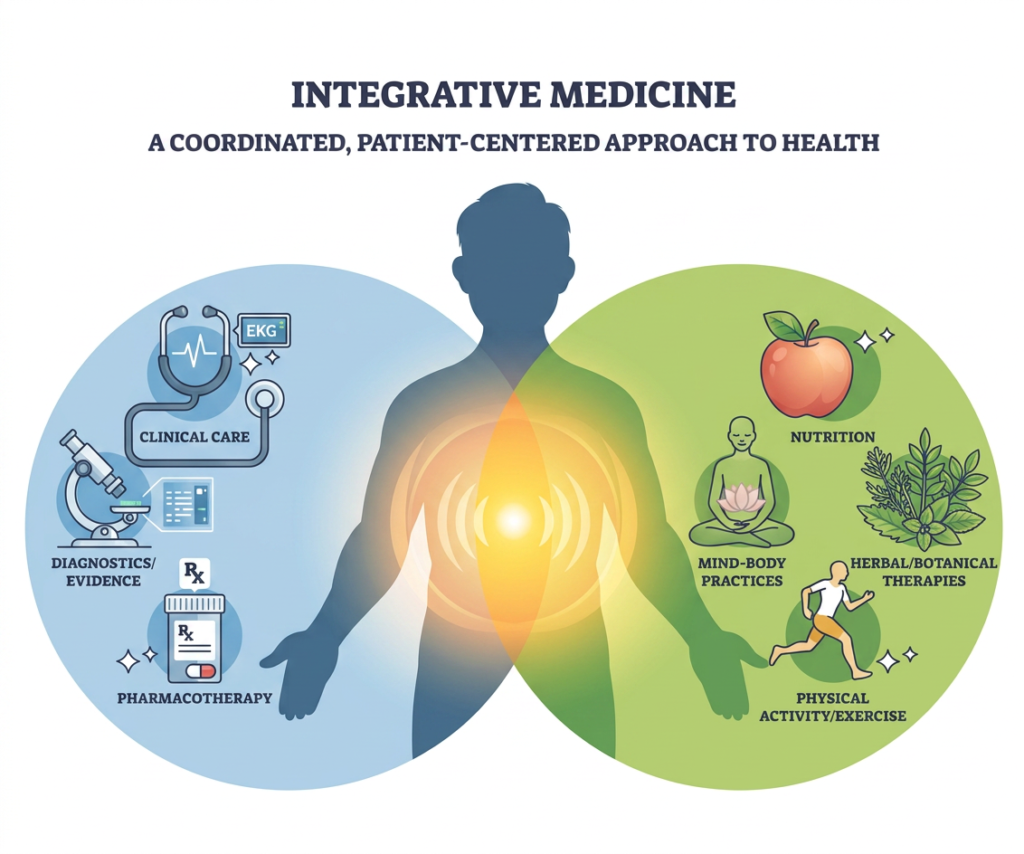
The conversation is shifting away from holistic vs western medicine and moving rapidly toward the benefits of integrative medicine. Integrative care bridges the gap by utilizing conventional treatments for structural and acute issues while deploying natural and lifestyle therapies to support systemic healing.
Integrative medicine bridges the gap by offering a coordinated approach to patient well-being.
Real-world case studies perfectly illustrate this synergy. A report released by Duke University highlighted highly successful integrated pain management programs in the United States. The People’s Community Clinic Integrative Pain Management Program in Austin, Texas, treats underserved communities by combining primary care physicians with yoga therapists, acupuncturists, and nutritionists. Similarly, the University of New Mexico Pain Consultation and Treatment Center blends anesthesiologists and neurologists with physical therapists and chiropractors. In these environments, patients might receive a targeted nerve block for immediate relief (Modern Medicine) followed by acupuncture and an anti-inflammatory nutrition plan to prevent the pain from returning (Natural Medicine).
FAQ
Can natural medicine replace modern medicine?
No. Natural medicine should not replace emergency care, surgery, or other time-sensitive treatment for serious illness or injury, because conventional acute care has clear outcome advantages in those settings.
What is the difference between holistic and alternative medicine?
Holistic medicine is a broad philosophy that looks at the whole person, while alternative medicine refers to non-mainstream practices used in place of conventional care. Integrative medicine is different again because it combines mainstream and complementary approaches in a coordinated way.
How do doctors view natural remedies?
Many clinicians are open to natural remedies when they are used responsibly, supported by evidence, and not substituted for necessary medical treatment. Major institutions such as NCCIH and WHO recognize complementary and traditional practices as important areas of health interest, but they also stress evaluation, safety, and appropriate use.