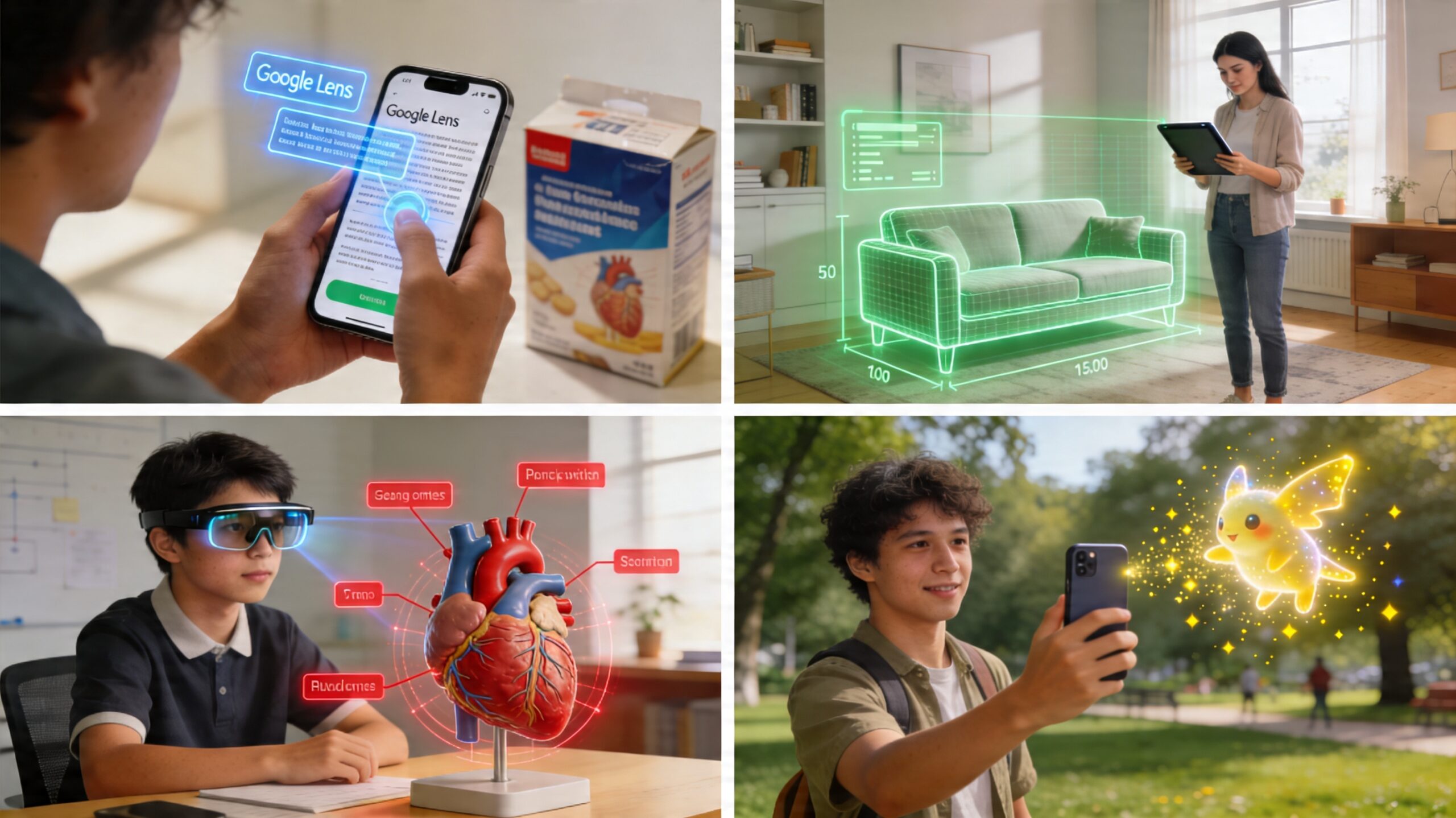
The Ultimate Guide to Augmented Reality Applications in 2026
The global augmented reality market is expanding at a breakneck pace, with valuations projected to surge from approximately $60.82 billion in 2025 to a staggering $1,998.98 billion by 2035, growing at a phenomenal compound annual growth rate (CAGR) of 41.80%. For tech enthusiasts, content creators, and everyday consumers alike, the era of spatial computing has officially arrived.briefingwire
Augmented Reality (AR) is a technology that overlays computer-generated images and information onto the real world, enhancing the user’s perception.
In this guide, we break down the 25+ most innovative and useful augmented reality applications available today, categorized by how you’ll use them. Whether you are interested in exploring immersive gaming, transforming your shopping experience, or diving into augmented reality application development, this post has you covered.
Quick Summary: Top 5 AR Apps for 2026
If you want a snapshot of the most impactful augmented reality applications dominating the market right now, here is a quick overview of our top picks:
| App Name | Category | Best For |
|---|---|---|
| Google Lens | Utility | Visual Search & Information |
| IKEA Place | E-commerce | Visualizing Furniture in Your Home |
| JigSpace | Education | Learning with 3D Models |
| Pokémon GO | Gaming | Location-Based AR Gaming |
| Snapchat | Social Media | AR Filters & Lenses |
AR Applications for Everyday Life (Utilities)
Utility-based augmented reality applications transform our smartphones into powerful tools that help us navigate, measure, and understand our immediate surroundings.
Google Lens
What it is: A powerful visual search tool developed by Google that uses a smartphone camera and deep machine learning to detect and understand objects in the real world.
Key Features:
- Real-time text translation
- Instant object and landmark identification
- Direct shopping links from physical items
Why it’s a top application: Google Lens is the ultimate everyday assistant. It seamlessly integrates artificial intelligence and computer vision to turn a simple augmented reality mobile application into a daily necessity for productivity and discovery.
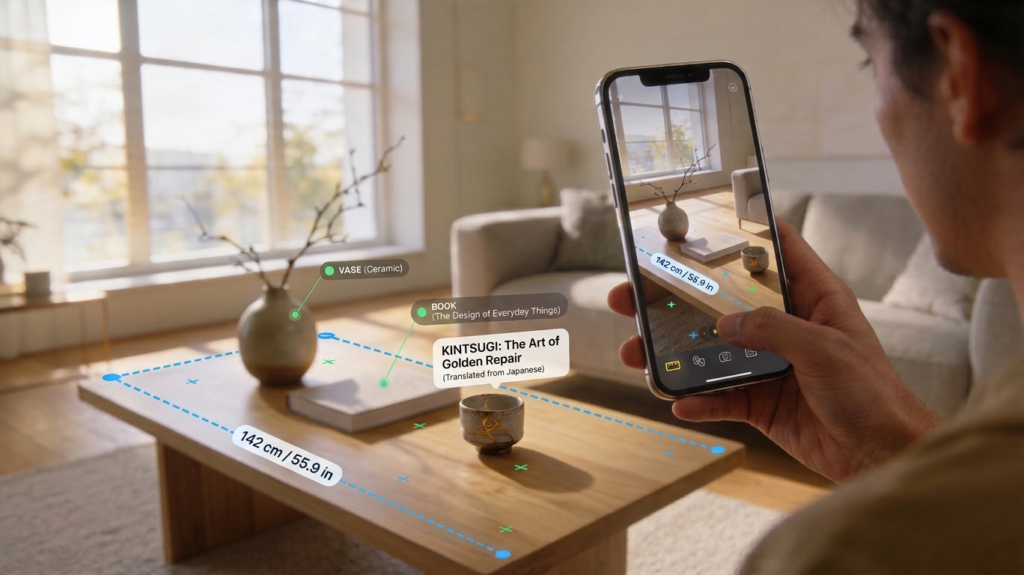
Measure
What it is: A built-in augmented reality application for iOS and Android devices that turns your smartphone into a digital tape measure.
Key Features:
- Accurate measurement of real-world dimensions
- Automatic calculation of rectangular object areas
- Built-in leveling tool
Why it’s a top application: It replaces physical hardware with a highly accessible digital alternative, demonstrating how basic augmented reality applications can solve minor everyday inconveniences effortlessly.
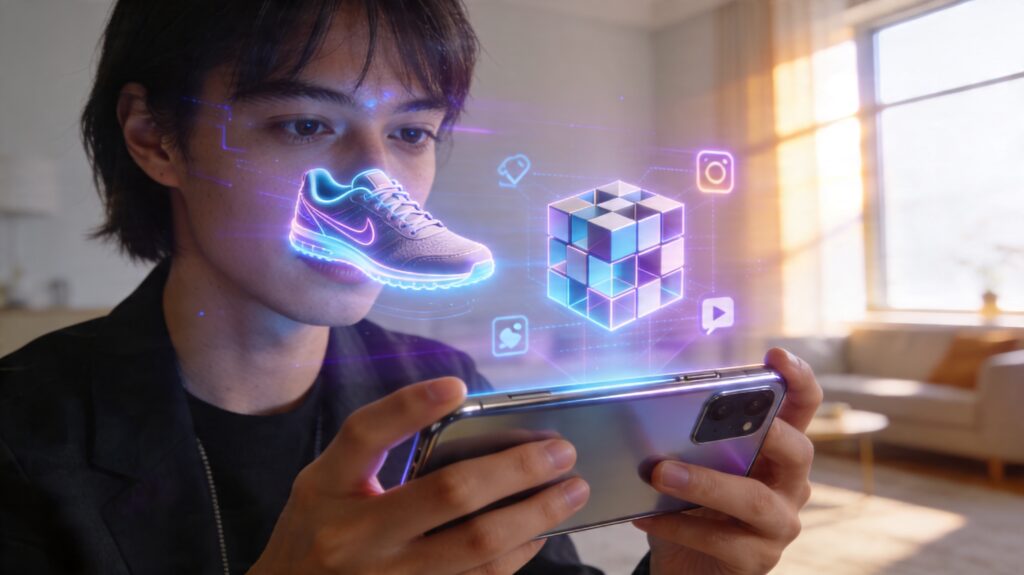
Wanna Kicks
What it is: A specialized AR utility for sneakerheads that allows users to virtually “try on” various pairs of footwear.
Key Features:
- 3D foot tracking technology
- Instant visualization of sneakers on your feet
- Direct links to purchase
Why it’s a top application: It bridges the gap between digital browsing and physical utility, saving users time and ensuring they make the right aesthetic choices before pulling out their wallets.
AR Applications for E-commerce & Shopping
Retailers are heavily investing in augmented reality application development to reduce return rates and increase buyer confidence.
IKEA Place
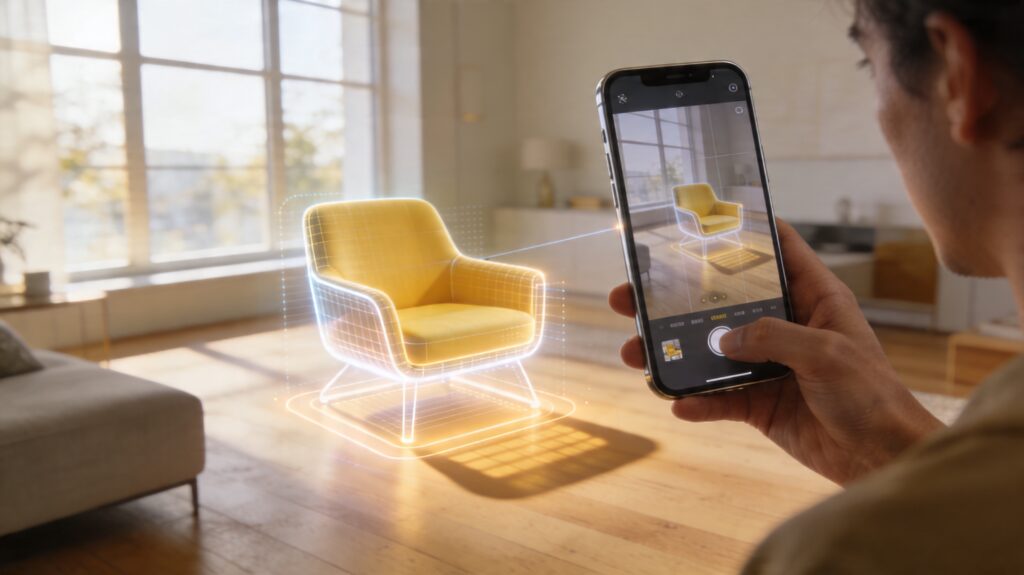
What it is: An interior design app that lets you virtually place true-to-scale 3D models of IKEA furniture in your own home.
Key Features:
- Accurate room scaling and lighting adjustment
- Massive catalog of digital furniture assets
- Easy sharing options for roommates or partners
Why it’s a top application: IKEA Place eliminated the guesswork of buying furniture. By letting users see exactly how a couch fits into their living room space, it revolutionized the e-commerce purchasing funnel.
Warby Parker Virtual Try-On
What it is: A feature within the Warby Parker app that uses TrueDepth camera technology to let users try on eyeglasses virtually.
Key Features:
- Photorealistic rendering of frames
- Accurate face mapping
- Seamless transition to the checkout process
Why it’s a top application: It provides a flawless, personalized shopping experience from the comfort of your couch, demonstrating the pinnacle of precision in an augmented reality mobile application.
Sephora Virtual Artist
What it is: A beauty app utilizing facial recognition to let users try on different shades of makeup, from lipsticks to eyeshadows.
Key Features:
- Virtual step-by-step tutorials
- Color matching for skin tones
- Side-by-side look comparisons
Why it’s a top application: Sephora empowers consumers to experiment fearlessly with their look, driving user engagement and leveraging AR as a core pillar of their digital marketing strategy.
AR Applications for Education & Learning
Immersive learning is changing how students and professionals absorb complex information.
JigSpace
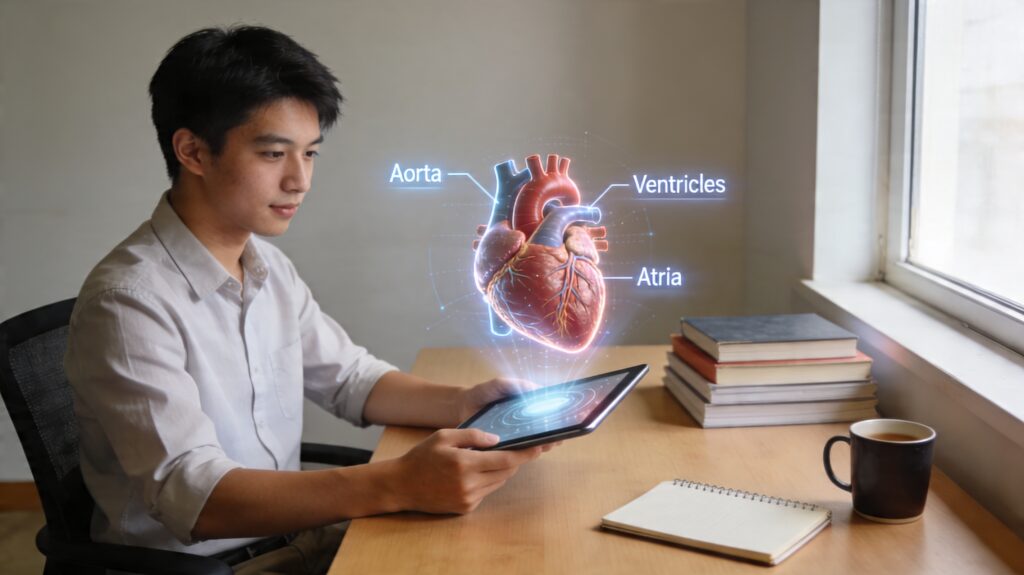
What it is: A platform for creating and exploring interactive, 3D presentations (called “Jigs”) that explain how things work.
Key Features:
- Step-by-step 3D breakdowns of complex machinery
- No-code augmented reality application development tools for creators
- Cross-platform sharing capabilities
Why it’s a top application: JigSpace democratizes 3D knowledge, making it incredibly easy for educators and businesses to explain intricate mechanical or scientific concepts visually.
Anatomy 4D
What it is: An educational app that offers an interactive journey inside the human body, ideal for medical students and biology enthusiasts.
Key Features:
- Detailed exploration of bodily systems
- Interactive physical targets that trigger 3D models
- In-depth physiological data overlays
Why it’s a top application: It brings static textbook images to life, offering an immersive spatial learning experience that dramatically improves retention rates.
Star Walk
What it is: An interactive astronomy guide that overlays constellations, planets, and satellites onto the night sky via your device’s camera.
Key Features:
- Real-time sky mapping
- Time-machine feature to see past/future celestial alignments
- Detailed astronomical information
Why it’s a top application: Star Walk takes a vast, untouchable concept like the universe and makes it immediately accessible and understandable to anyone with a smartphone.
AR Applications for Gaming & Entertainment
Gaming has always pushed the boundaries of technology, and augmented reality applications are no exception.
Pokémon GO
What it is: The legendary location-based AR game that requires players to walk around the real world to catch virtual creatures.
Key Features:
- GPS and location-based mechanics
- AR camera mode for immersive catching
- Global community events and battles
Why it’s a top application: It remains the most commercially successful augmented reality mobile application of all time, proving that AR can drive massive social interaction and physical movement.
Harry Potter: Wizards Unite
What it is: A location-based magical AR game that tasks players with finding artifacts and casting spells in their real-world neighborhoods.
Key Features:
- Immersive magical encounters
- Rich storytelling integrated with local landmarks
- Collaborative multiplayer challenges
Why it’s a top application: Although its active lifecycle concluded, it set a high benchmark for narrative-driven AR gaming and showed how massive entertainment IPs can leverage AR technology.
The Machines
What it is: A competitive multiplayer game that turns your physical tabletop into a futuristic battlefield using spatial tracking.
Key Features:
- High-fidelity 3D graphics
- Spatial audio that changes based on your physical position
- Real-time multiplayer combat
Why it’s a top application: It perfectly demonstrates the capability of AR to transform any flat surface in your home into an interactive, shared digital playground.
AR Applications for Social Media
For content creators, augmented reality applications have become indispensable tools for audience engagement.
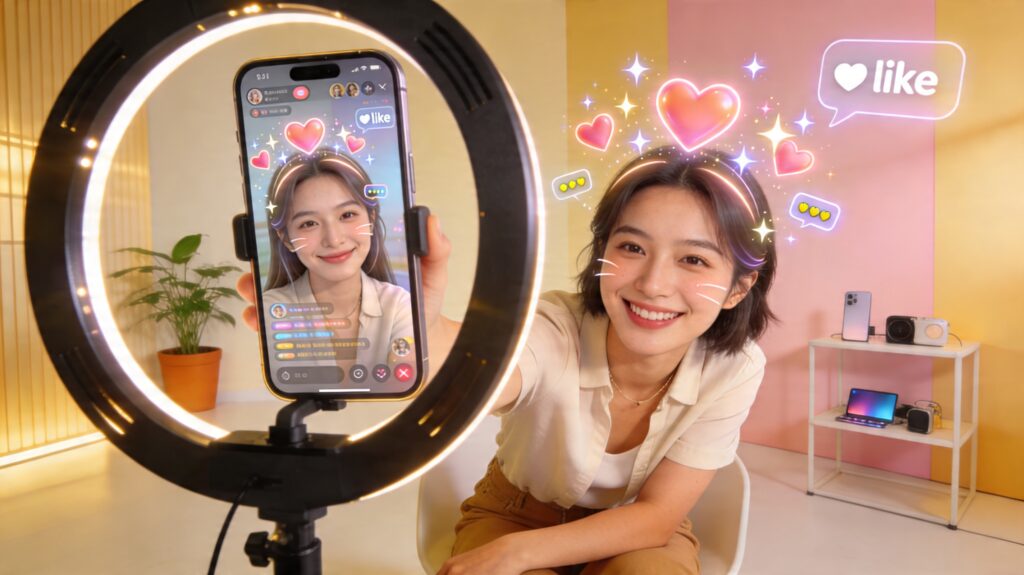
Snapchat Lenses
What it is: The pioneering feature that popularized augmented reality for the masses through interactive facial filters and world lenses.
Key Features:
- Real-time facial transformation
- World-tracking lenses for environmental effects
- Lens Studio for custom augmented reality application development
Why it’s a top application: Snapchat normalized daily AR usage. Their robust creator tools allow anyone to build and share viral AR experiences, driving millions of daily interactions.
Instagram Filters
What it is: AR effects integrated directly into Instagram Stories and Reels, powered by Meta’s Spark AR platform.
Key Features:
- Aesthetic color grading and lighting tweaks
- Interactive mini-games triggered by facial expressions
- Brand-sponsored immersive effects
Why it’s a top application: By integrating AR directly into one of the world’s largest social networks, Instagram allows content creators to effortlessly enhance their visual storytelling and engage with followers in novel ways.
AR Applications for Art & Creativity
The art world is embracing AR to add layers of digital narrative to traditional physical mediums.
Artivive
What it is: An AR tool that allows artists to link classical physical artworks with digital video or animation overlays.
Key Features:
- Seamless image recognition
- Bridge between traditional and digital art
- Exhibition-ready integration for museums
Why it’s a top application: Artivive empowers artists to tell richer stories, creating a literal “hidden layer” of creativity that viewers can unlock with their phones.
SketchAR
What it is: A creative assistant that uses AR to project virtual sketches onto paper or walls, helping users trace and learn to draw.
Key Features:
- Step-by-step drawing lessons
- Surface tracking for accurate projection
- AI-powered drawing analysis
Why it’s a top application: It takes the frustration out of learning to draw by providing a real-time, interactive stencil that adapts to the user’s physical environment.
The Future of AR Applications: What’s Next?
The next wave of augmented reality applications will extend far beyond the smartphone. As of 2026, the transition toward spatial computing has reached a definitive milestone. We are witnessing a massive shift in augmented reality application development toward wearable technology. According to ABI Research, nearly 28 million augmented and mixed reality smart glasses are expected to ship globally in 2026, integrating AR directly into our line of sight.blog.shayaikehassan+1
Furthermore, WebAR (browser-based AR) is eliminating the need for users to download a standalone augmented reality mobile application, making experiences frictionless. Paired with the rise of “agentic AI”—systems that can reason and act autonomously—future AR applications will not just overlay data, but actively anticipate our needs, offering real-time, context-aware assistance whether we are navigating a new city or assembling complex machinery.
Frequently Asked Questions (FAQ Section)
What is the most popular AR app?
Currently, Pokémon GO and Snapchat remain the most widely used augmented reality applications globally. While Pokémon GO dominates the gaming sector with its location-based mechanics, Snapchat’s AR lenses generate billions of daily interactions, making AR a natural part of social communication.
How does an AR application work?
An augmented reality mobile application utilizes a combination of hardware (cameras, gyroscopes, LiDAR sensors) and software (computer vision, machine learning). The camera maps the physical environment, while the software identifies objects, tracks depth, and accurately anchors computer-generated 3D graphics onto the real-world display.
Can I create my own AR application?
Yes! Augmented reality application development is more accessible than ever. Platforms like Apple’s ARKit, Google’s ARCore, Meta’s Spark AR, and Snapchat’s Lens Studio offer intuitive, often “no-code” interfaces. These tools allow beginners and seasoned developers alike to create custom filters, utilities, and immersive 3D experiences.
Conclusion & Key Takeaways
The landscape of augmented reality is evolving from a novelty into an essential digital infrastructure. By blending the physical and digital worlds, these tools are fundamentally changing how we interact with information.
- Utility & E-commerce: AR is solving practical problems, from measuring rooms to visualizing furniture, drastically reducing purchase hesitation.
- Education & Gaming: Immersive 3D environments are making learning more interactive and gaming more physically engaging.
- Social & Creativity: Platforms like Snapchat and Artivive are empowering creators to build entirely new visual experiences.
- The Future is Wearable: With smart glasses and AI integration on the rise, AR is moving from the palm of our hands directly to our line of sight.
To dive deeper into how emerging technologies are reshaping the digital landscape, check out McKinsey’s Insights on Tech Trends.